Choosing the right ASTM F136 titanium body jewelry involves much more than comparing designs and prices. Professional piercing studios, jewelry brands, distributors and wholesalers must also consider material documentation, surface polishing, threading accuracy, dimensional consistency and production quality.
These details are especially important when purchasing products such as titanium labrets, nose studs, earrings, eyebrow jewelry, navel rings and piercing components in bulk.
This guide explains what buyers should know about ASTM F136 titanium, how it relates to G23 titanium, which quality factors should be inspected and how to evaluate a titanium body jewelry manufacturer before placing an order.
What Is ASTM F136 Titanium?
ASTM F136 is a material specification covering wrought titanium-6 aluminum-4 vanadium ELI alloy, commonly written as Ti-6Al-4V ELI.
“ELI” means Extra Low Interstitial. The standard specifies chemical, mechanical and metallurgical requirements for titanium alloy used in surgical implant applications. It applies to material forms such as bars, wires, sheets and plates.
In the piercing industry, ASTM F136 titanium is widely requested by professional piercers and body jewelry buyers because it provides a clearly defined material standard. The Association of Professional Piercers lists ASTM F136-compliant Ti-6Al-4V ELI among the titanium materials suitable for initial piercing jewelry.
However, it is important to understand that ASTM F136 primarily describes the raw material. It does not automatically guarantee that a finished piece of jewelry has correct dimensions, smooth threading or a high-quality polished surface.
A professional buyer should therefore evaluate both the material and the finished product.
Is G23 Titanium the Same as ASTM F136 Titanium?
The terms “G23 titanium” and “ASTM F136 titanium” are frequently used together, but they should not automatically be treated as identical.
Grade 23 generally refers to Ti-6Al-4V ELI titanium alloy. ASTM F136 is a specific standard defining chemical, mechanical and metallurgical requirements for material intended for surgical implant applications.
In simple terms, Grade 23 describes an alloy grade, while ASTM F136 describes a material specification that the alloy must meet.
A product being described as “G23 titanium” does not, by itself, prove that the material complies with ASTM F136. When ASTM F136 compliance is required, buyers should request suitable material documentation from the supplier.
Depending on the order and customer requirements, the documentation may include:
- A material or mill certificate
- Chemical composition results
- Material heat or wire lot number
- Reference to the applicable ASTM standard
- Traceability between the raw material and production batch
This distinction is particularly important for professional piercing studios, distributors and private-label brands that need consistent material records across different orders.
Why Is Titanium Popular for Body Piercing Jewelry?
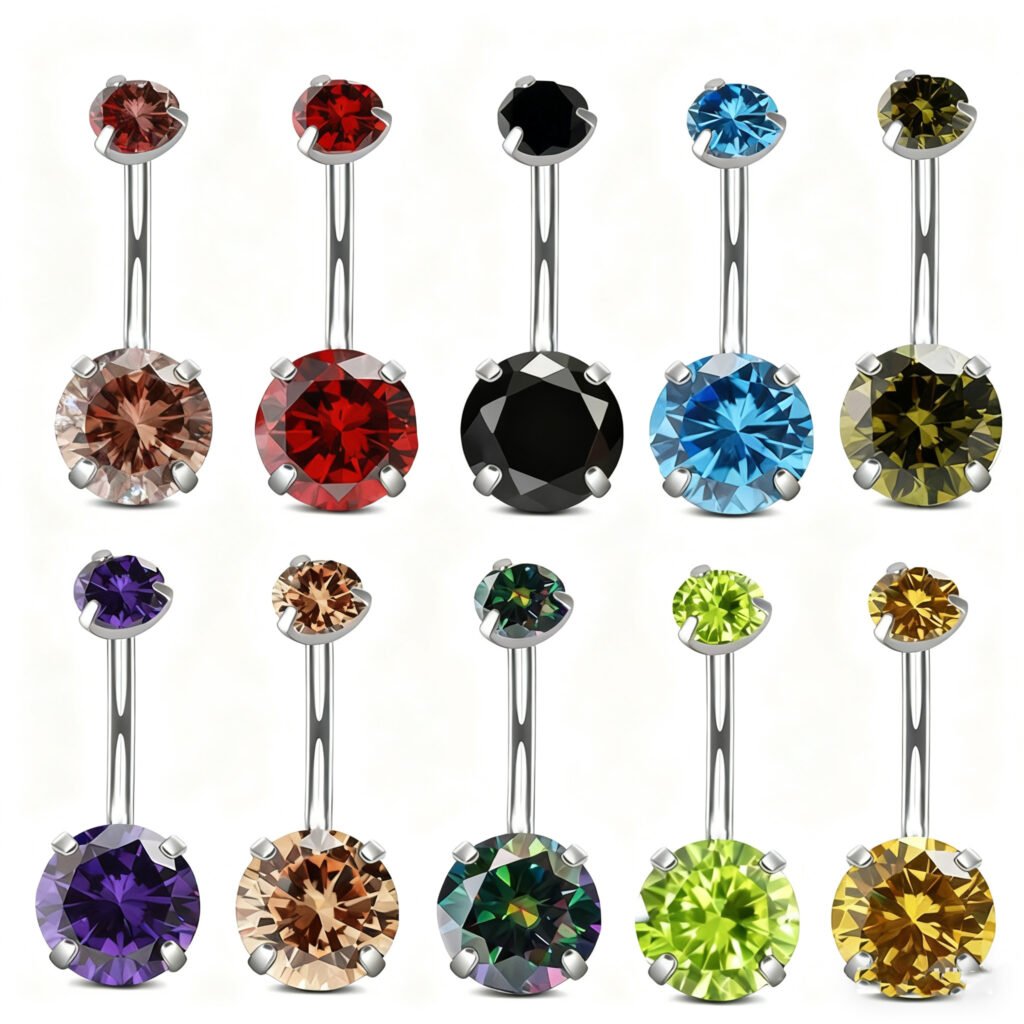
Titanium offers several practical advantages for body jewelry manufacturing.
Lightweight Construction
Titanium is considerably lighter than many commonly used metal alloys. This makes it suitable for a wide range of piercing jewelry, including labrets, barbells, circular barbells, clickers and larger-gauge pieces.
Corrosion Resistance
Titanium has strong corrosion resistance, which is an important property for jewelry designed for prolonged wear.
Multiple Jewelry Styles
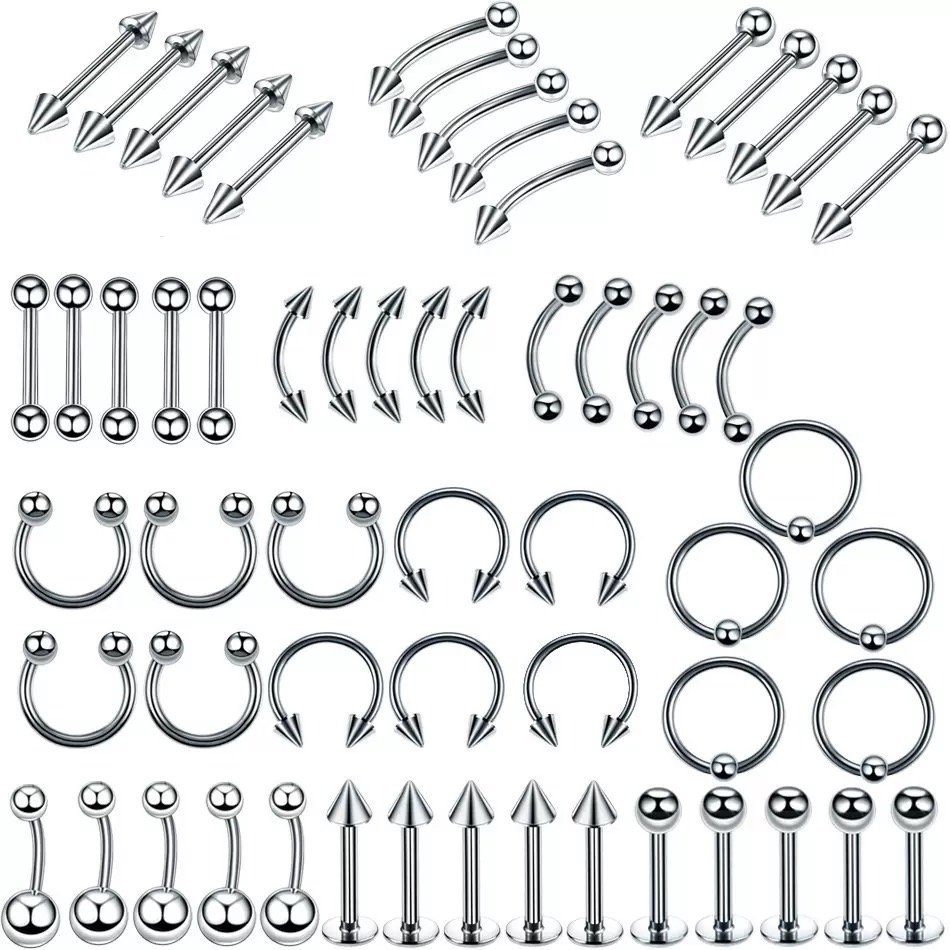
Titanium can be machined into many different shapes and structures, including:
- Internally threaded jewelry
- Externally threaded jewelry
- Threadless jewelry
- Labret posts and flat backs
- Straight and curved barbells
- Circular barbells
- Nose studs and rings
- Clickers and captive bead rings
- Navel and eyebrow jewelry
- Piercing balls and components
Customization Possibilities
Titanium body jewelry can be produced in customized gauges, lengths, ball sizes and designs. Depending on the product structure, it may also support laser logo engraving and private-label packaging.
Material Grade Is Only the Beginning
Professional buyers should not evaluate titanium piercing jewelry based on the material name alone. Even when suitable raw material is used, manufacturing quality can affect the appearance, fit and consistency of the finished jewelry.
The following factors should be inspected carefully.
1. Surface Polishing and Finish
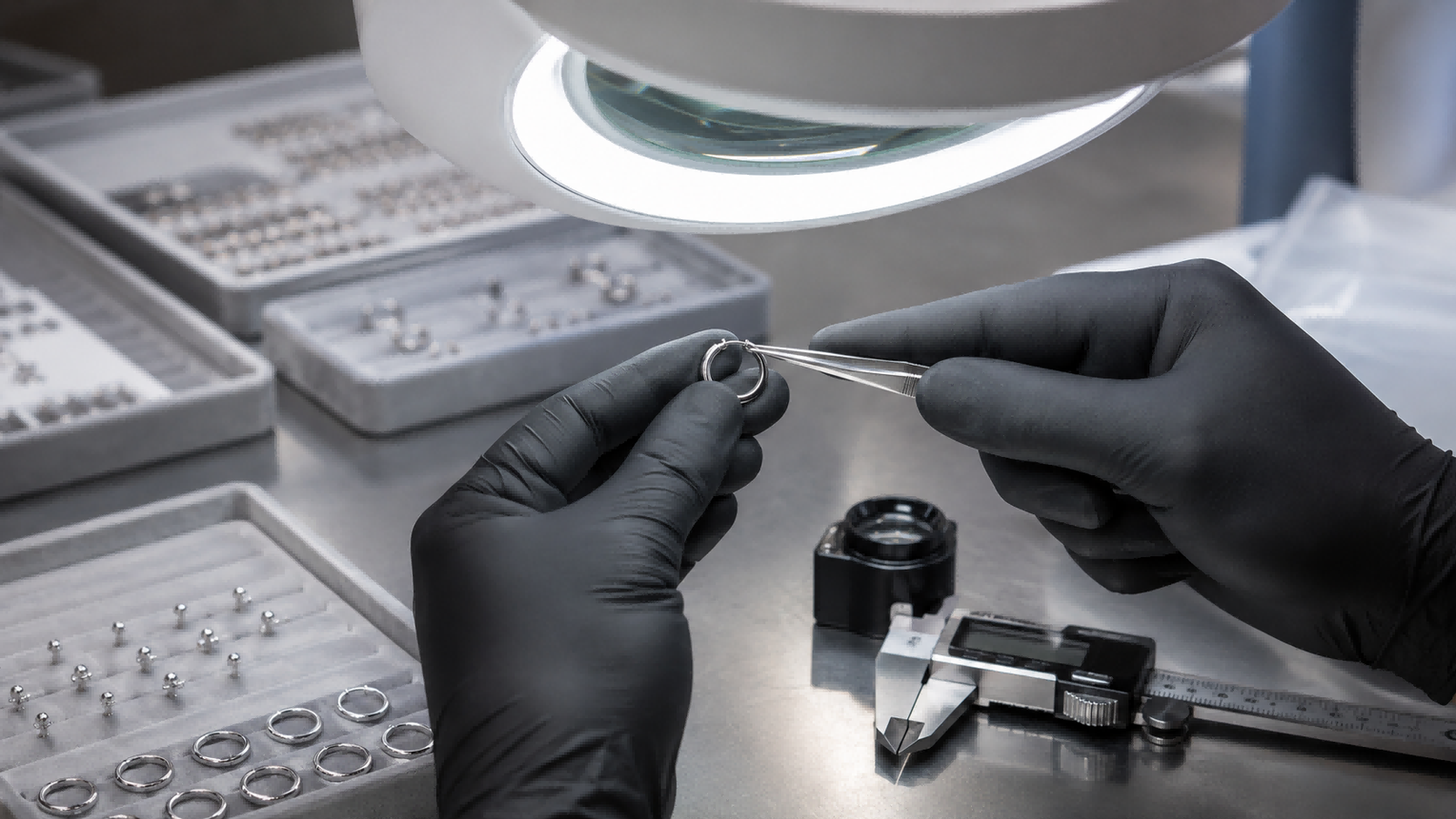
A high-quality polished finish should appear smooth and uniform. Buyers should check the jewelry under strong lighting or magnification for:

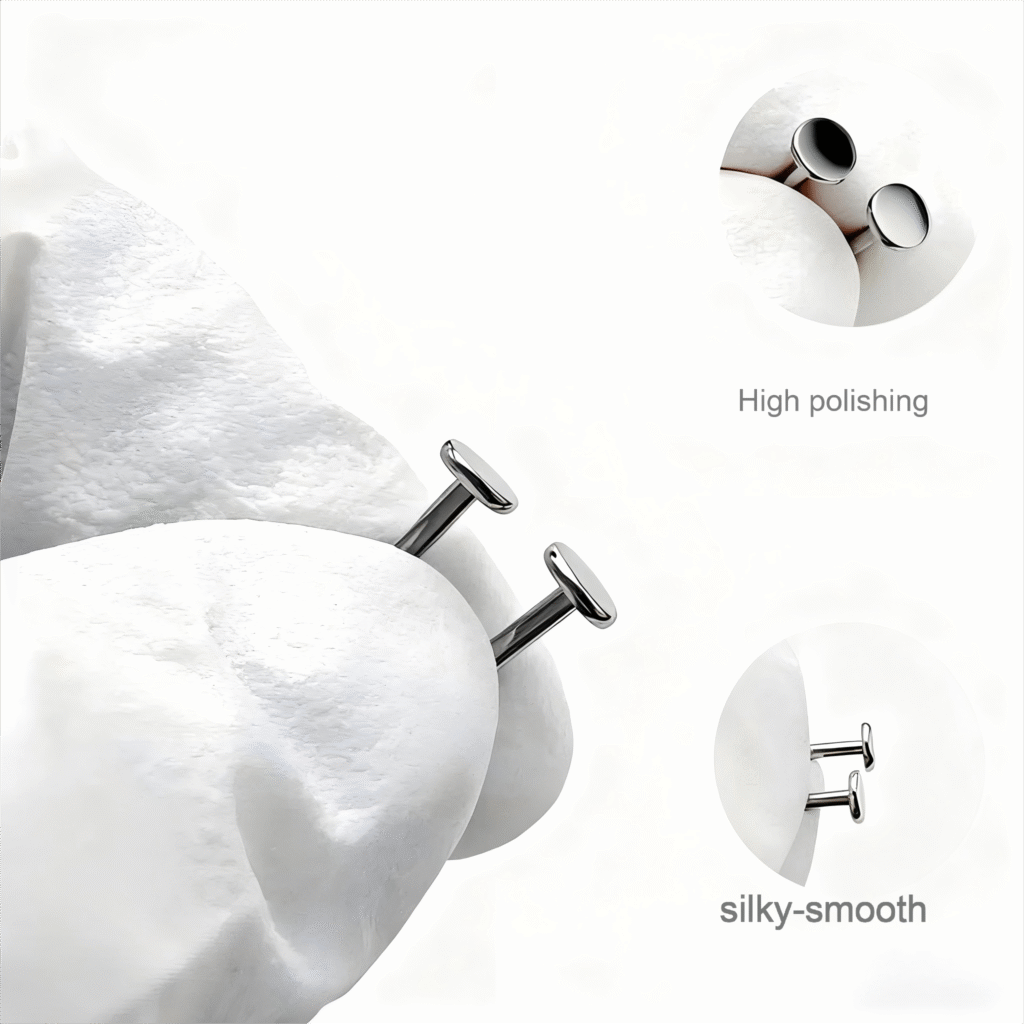
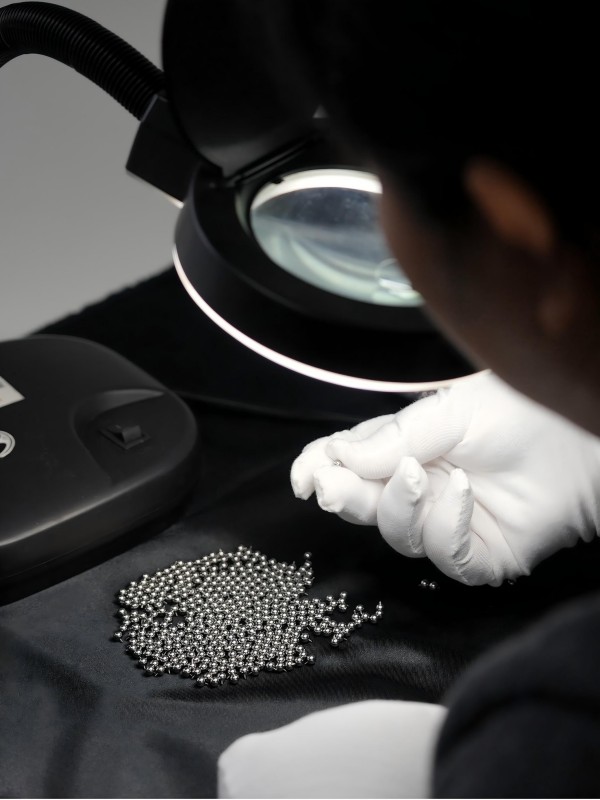
- Visible scratches
- Machining marks
- Rough edges
- Pits or uneven surfaces
- Polishing residue
- Sharp transitions
- Inconsistent brightness
Areas around threads, ball seats, hinges, grooves and decorative components require particular attention because they are more difficult to polish consistently.
When comparing suppliers, buyers should request production-quality samples instead of relying only on catalog photos.
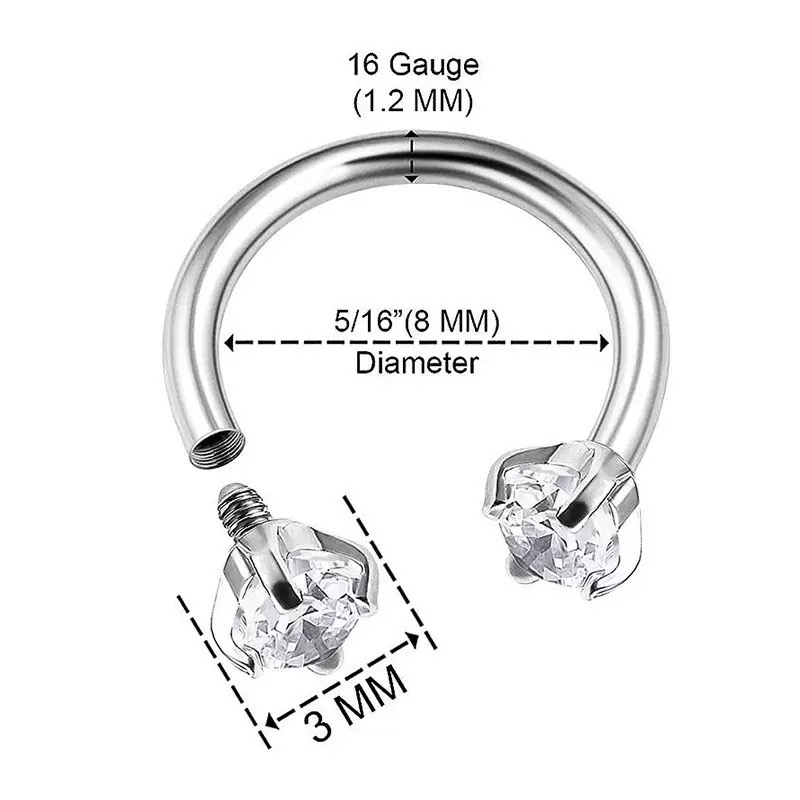
2. Threading Accuracy
Threading is one of the most important elements of internally threaded titanium jewelry.
https://fmbodyjewelry.com/nose-piercing-jewelery-wholesale/
Professional buyers should evaluate:
- Whether the threading is centered
- Whether the ball or end screws on smoothly
- Whether the threads feel loose or unstable
- Whether the ball closes flush against the bar
- Whether there is a visible gap after closing
- Whether compatible components can be exchanged consistently
- Whether repeated opening and closing remains smooth
The thread specification should also be confirmed before ordering. Bars and balls with similar external dimensions may not necessarily be compatible if their thread structures are different.
For a wholesale titanium body jewelry order, it is helpful to approve the complete combination of the bar, ball and decorative end—not only the individual components.
3. Dimensional Consistency
https://fmbodyjewelry.com/accessory/
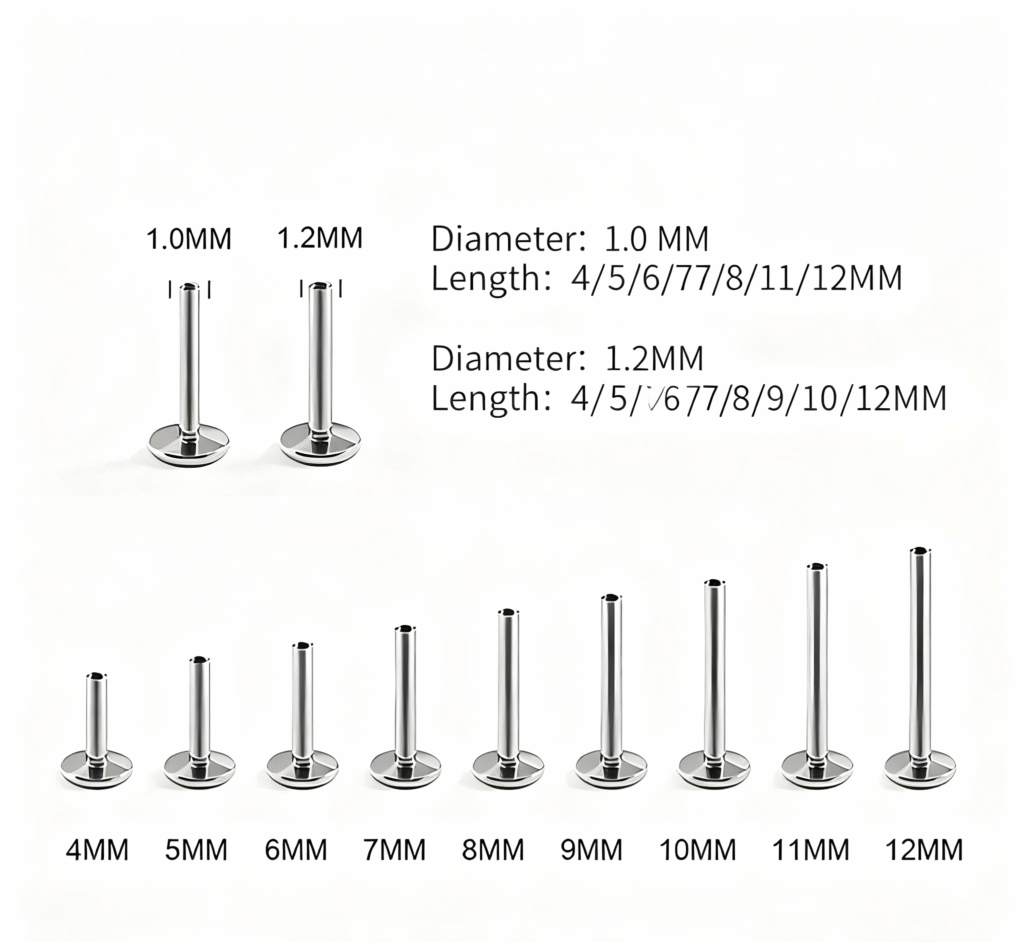
A catalog size is not enough to define a product completely. Buyers should confirm how the supplier measures each dimension and what production tolerances apply.
Important measurements may include:
- Bar gauge
- Wearable length
- Overall length
- Ball diameter
- Disc diameter
- Ring inner diameter
- Ring outer diameter
- Thread size
- Decorative end dimensions
Dimensional consistency becomes particularly important when purchasing large quantities or ordering replacement components that must fit existing jewelry.
Before mass production, both parties should confirm the measurement method, approved dimensions and acceptable tolerances in writing.
4. Component Fit and Closing Appearance
The connection between a ball and a bar can vary between manufacturers.
For example, buyers may require:
- A standard rounded ball
- A machined flat seat around the threading
- A defined edge between the flat seat and the sphere
- A flush connection with no visible gap
- A specific ball-to-bar proportion
Reference photos are useful, but physical reference samples provide more accurate information about geometry, polish, threading and fit.
For custom components, buyers should confirm whether additional tooling or machine setup is required and whether a separate MOQ applies to each specification.
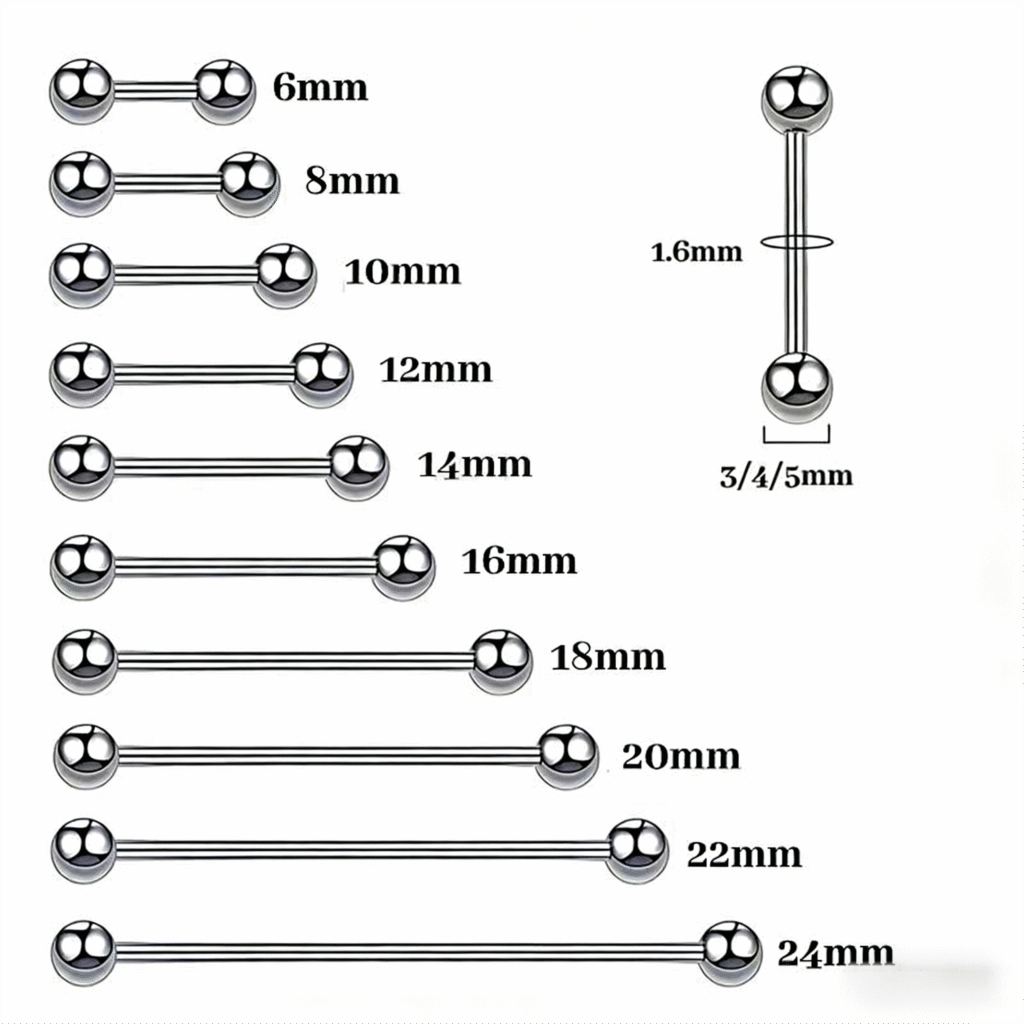
Main Types of Titanium Body Jewelry
A professional titanium body jewelry manufacturer may supply complete jewelry as well as individual piercing components.
Titanium Labrets
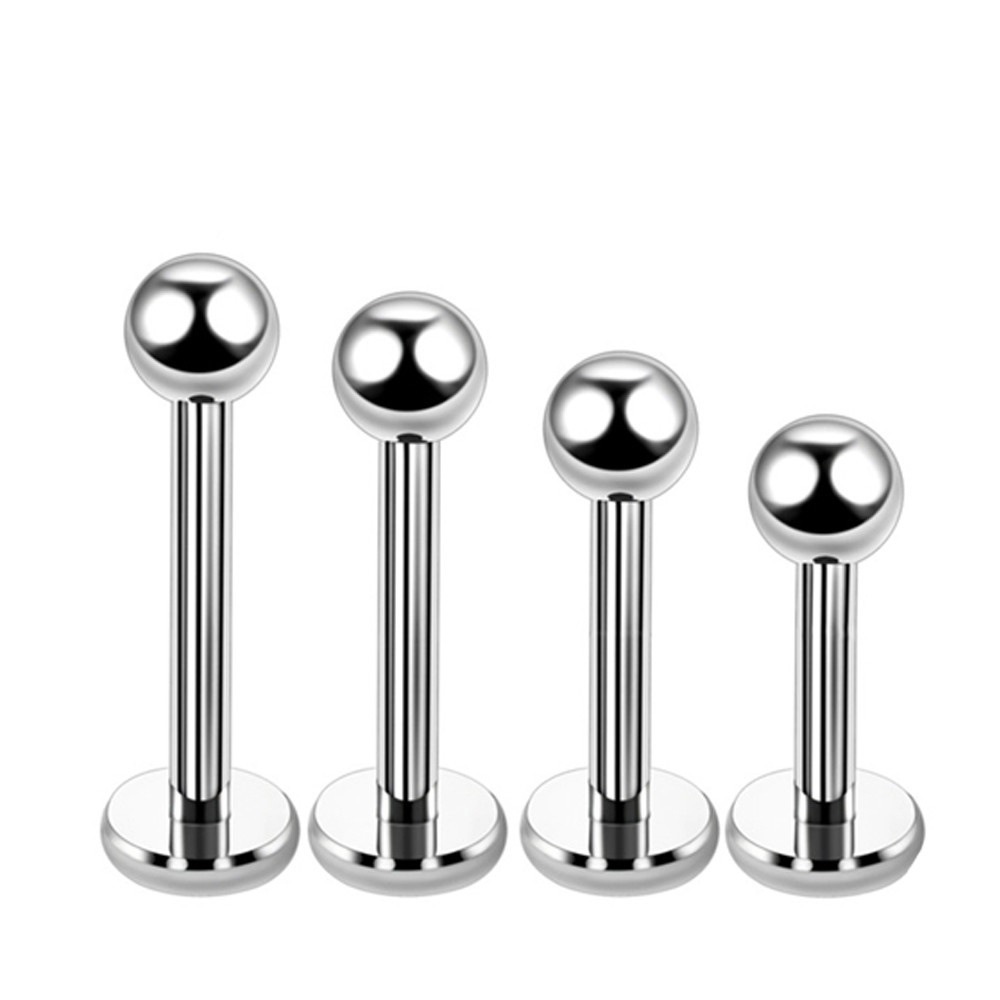
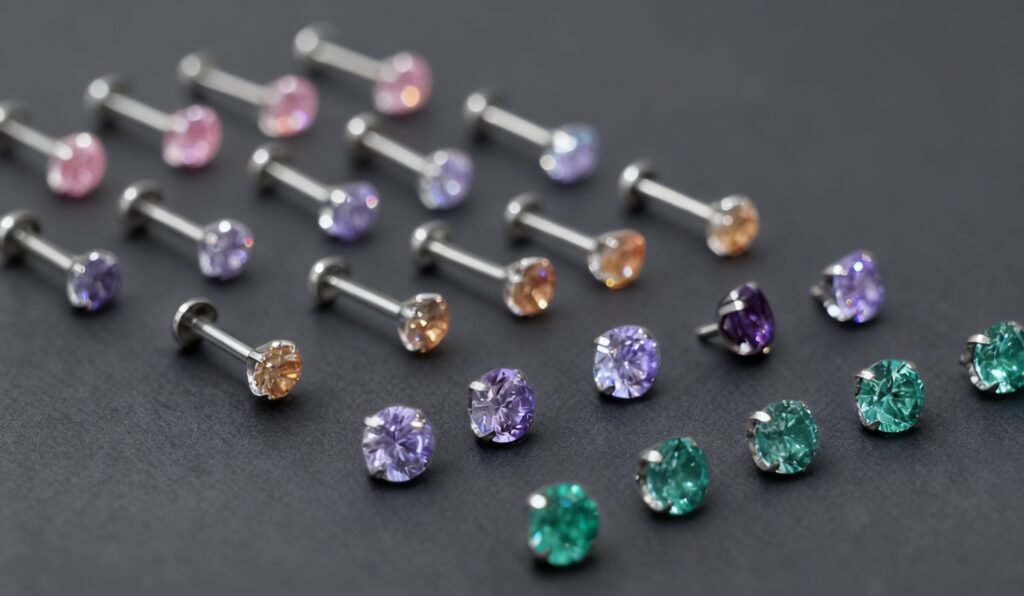
Titanium labrets normally consist of a straight post with a flat disc on one end and a removable ball or decorative end on the other. They are available in internally threaded, externally threaded and threadless structures.
Buyers should confirm the gauge, wearable length, flat-back diameter, thread specification and matching top size.
Titanium Nose Studs and Rings
Titanium nose jewelry may include straight nose studs, L-shaped studs, screw-shaped studs, hoops and clickers.
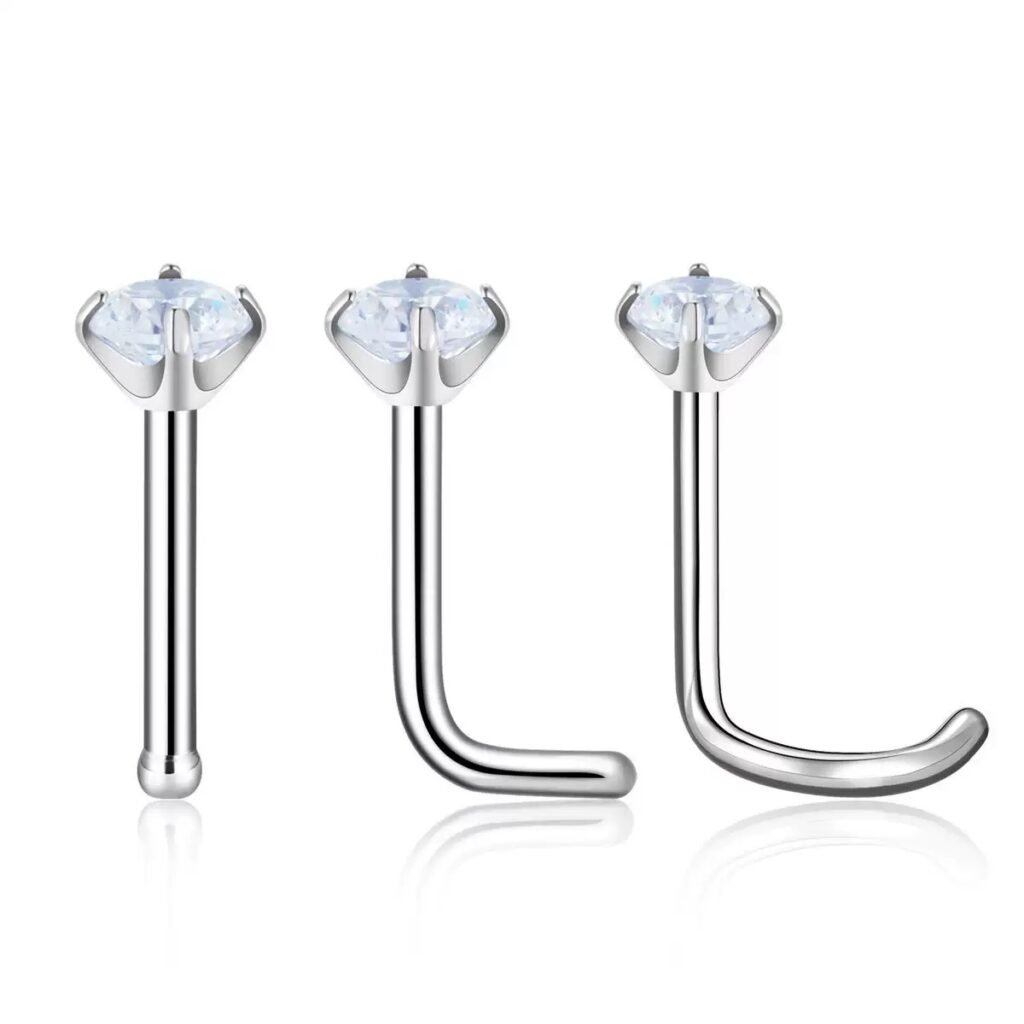
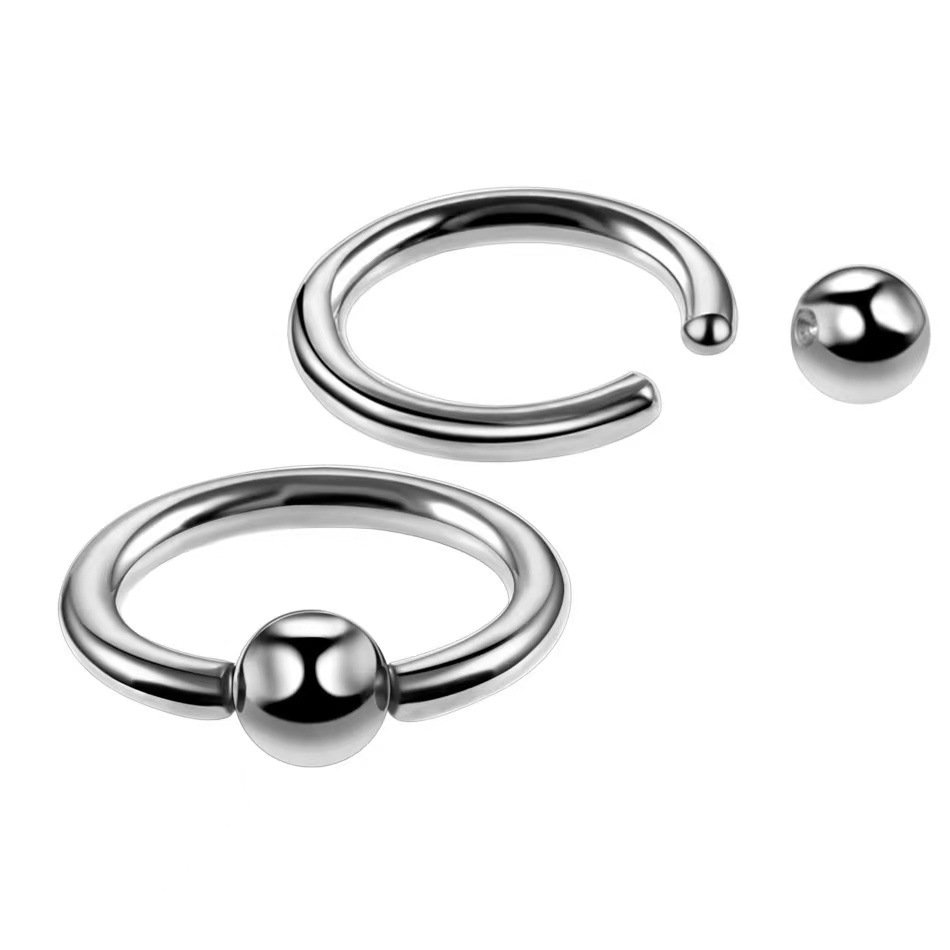
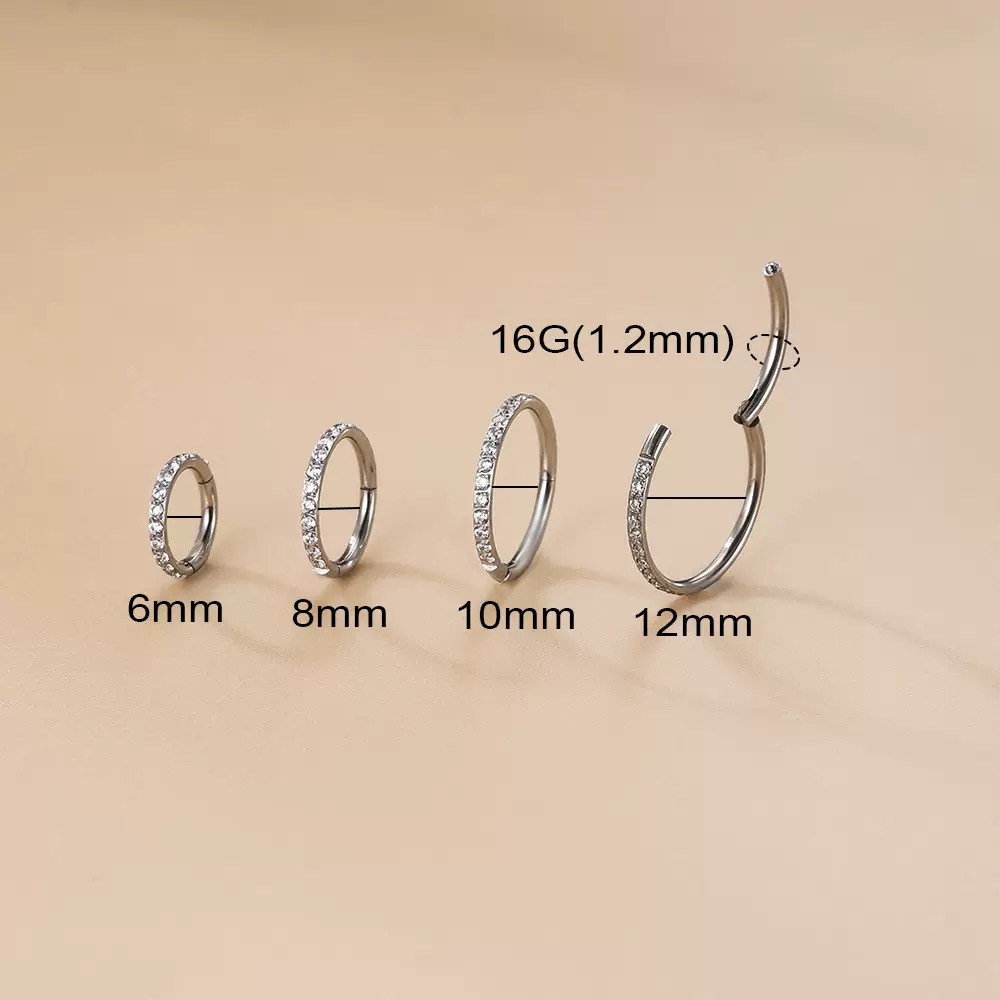
For wholesale titanium nose studs, buyers should pay attention to wire thickness, wearable dimensions, polishing and the consistency of bends or curves.
Titanium Earrings and Ear Studs
Titanium ear jewelry includes simple studs, flat-back labrets, hoops, clickers and decorative threaded ends.
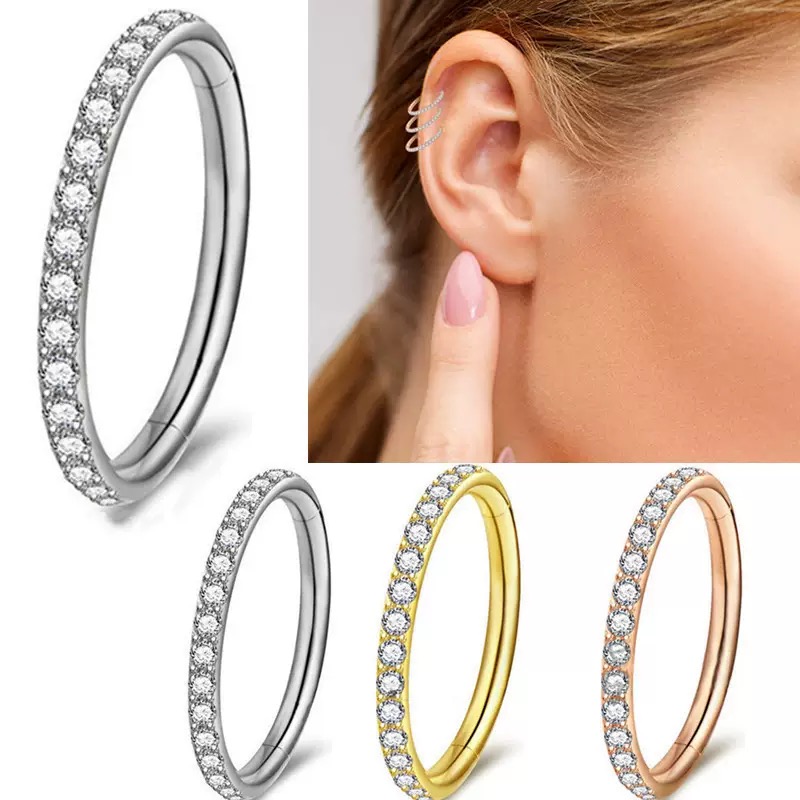
titanium internal eyebrow piercing fmn0018
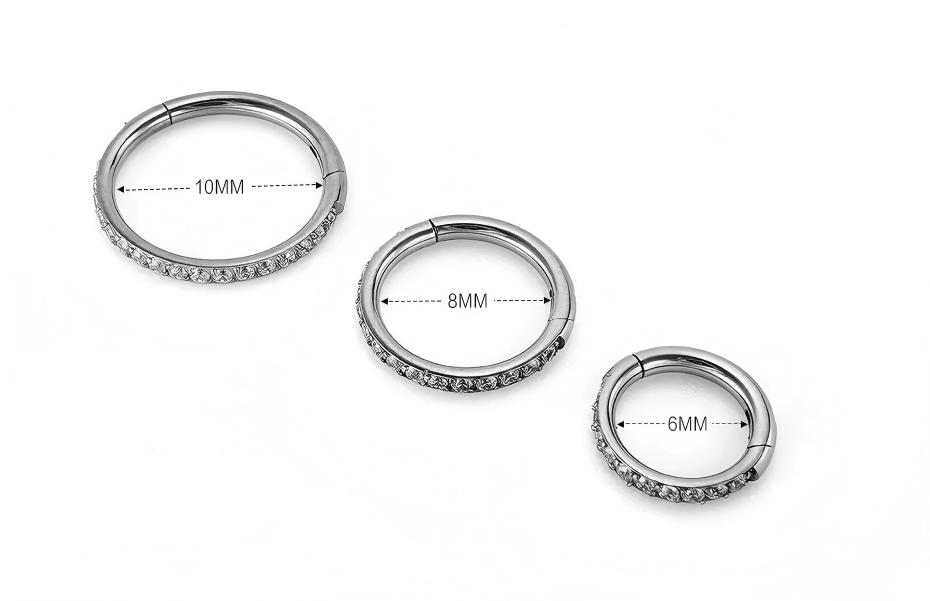
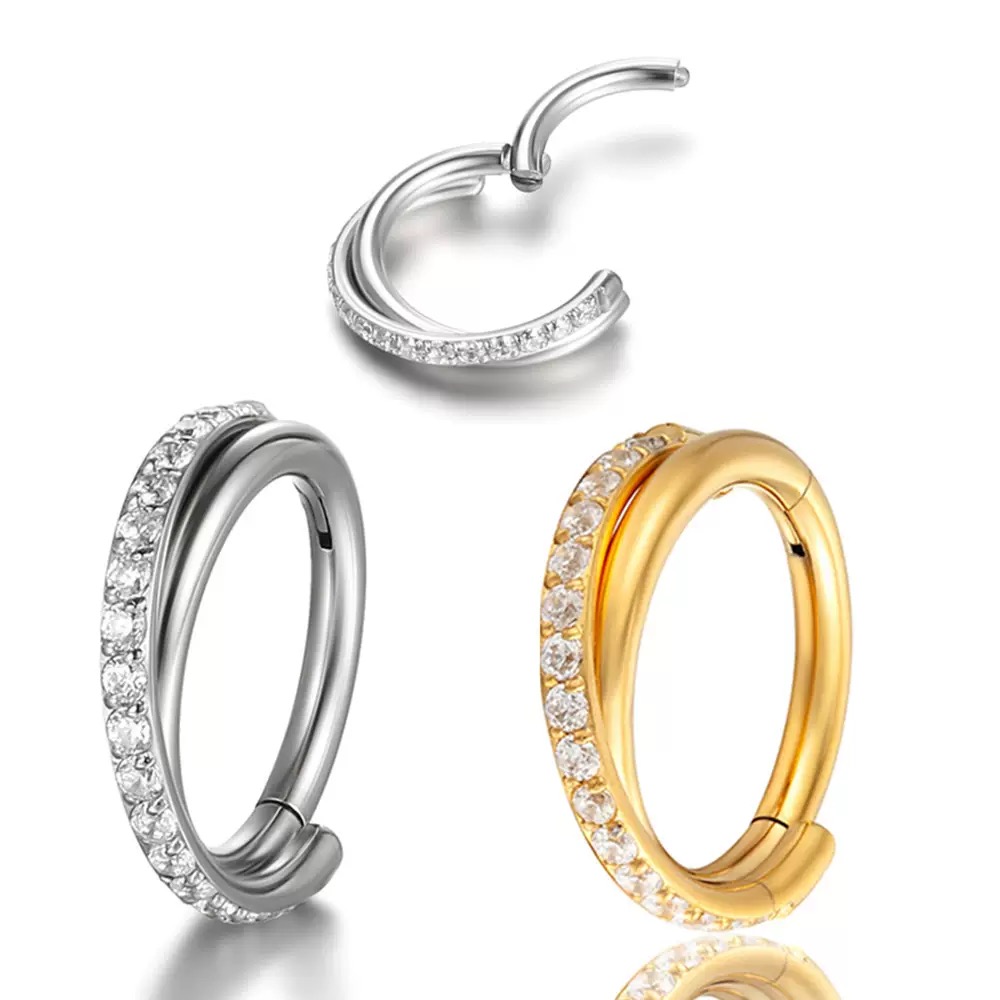
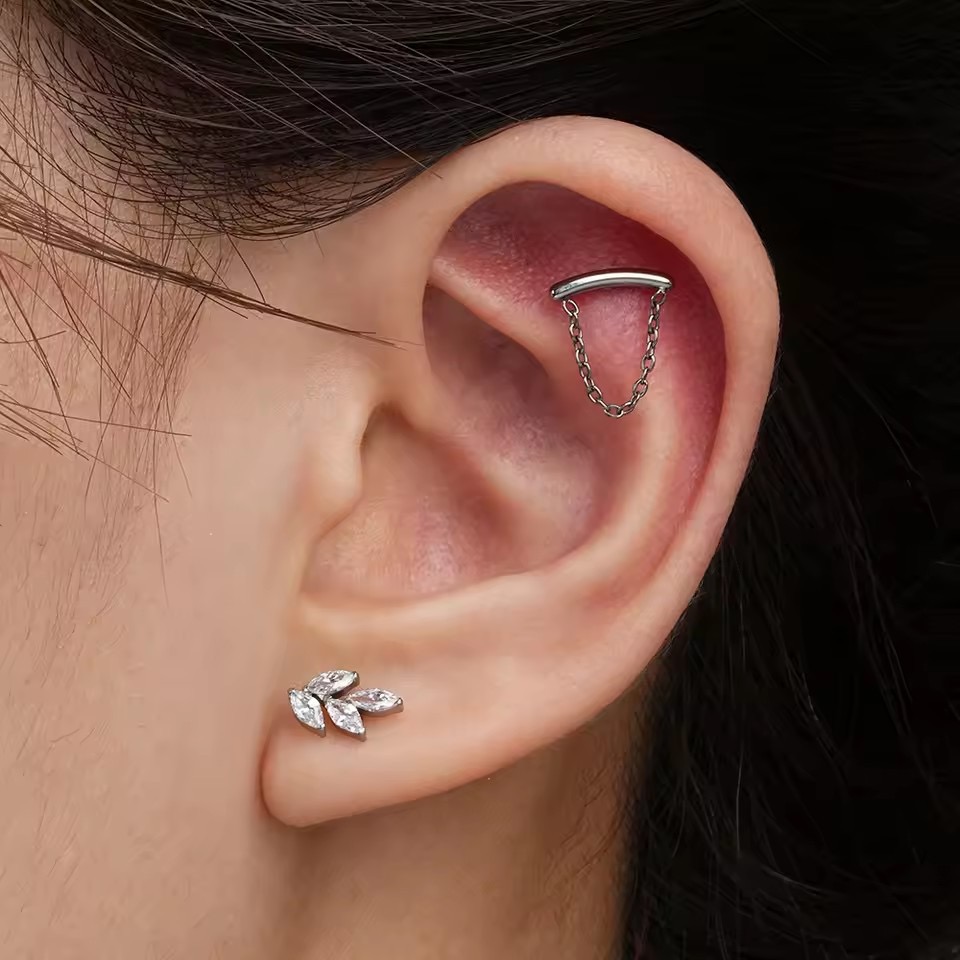
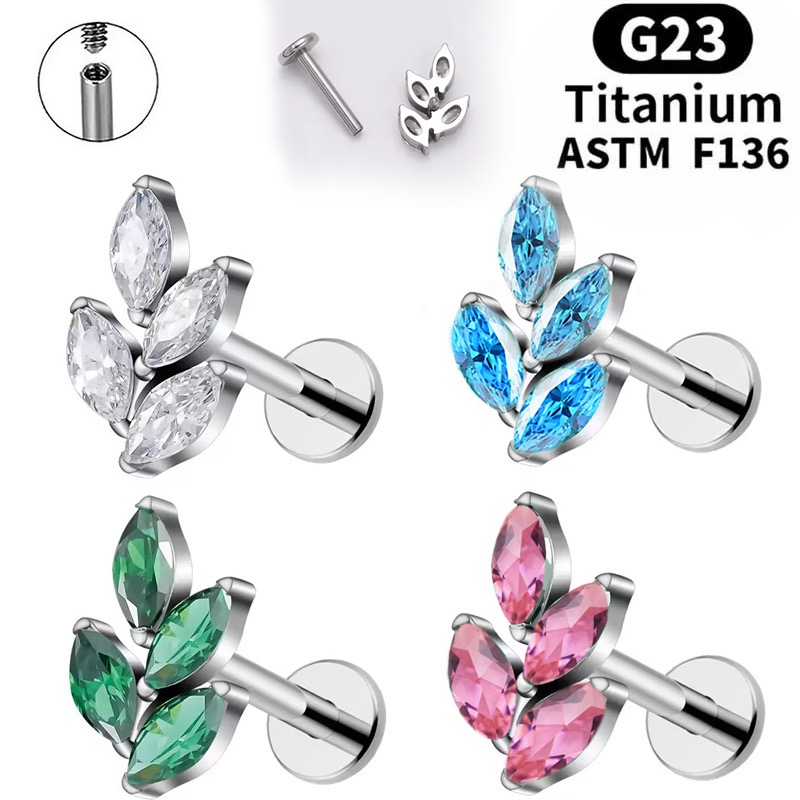
For private-label collections, the manufacturer may customize sizes, designs, logo details and packaging according to the brand’s positioning.
Titanium Eyebrow Jewelry
Curved barbells are commonly used for eyebrow jewelry. Important specifications include bar gauge, wearable length, curve, thread size and ball diameter.
Both balls should be checked for smooth threading and secure closing.
Titanium Navel Jewelry
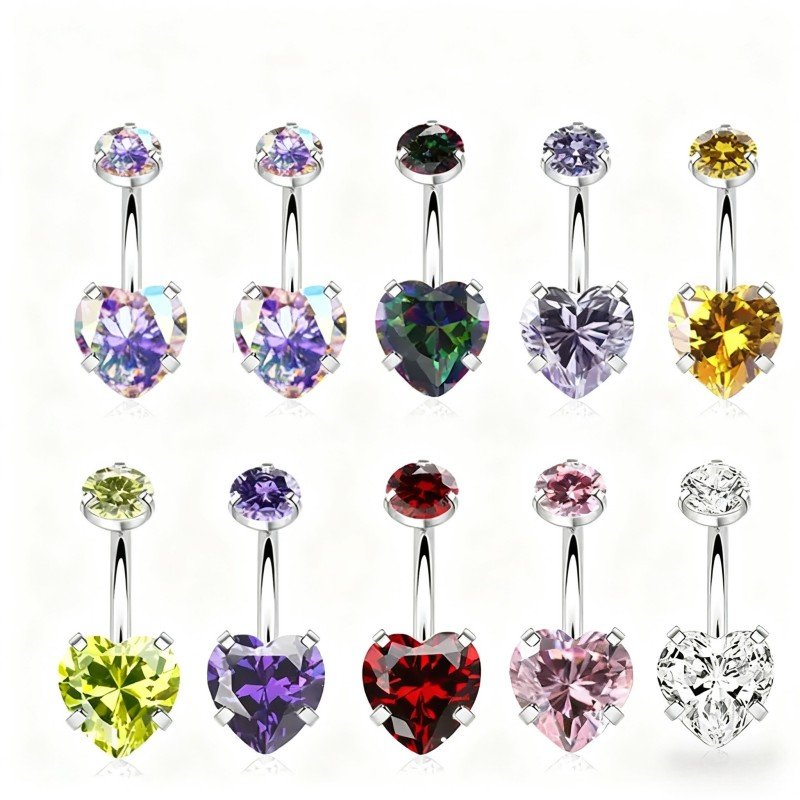
Navel jewelry is available in simple curved barbell styles as well as decorative designs. Buyers should confirm the gauge, wearable length, upper ball size, lower ball size and decoration structure.
Because navel jewelry may include several connected components, the complete assembled product should be evaluated during sampling.
Titanium Piercing Components
Piercing components may include:
- Straight and curved bars
- Labret posts
- Balls and threaded ends
- Flat-back discs
- Cones and spikes
- Circular barbells
- Hinged ring components
- Dermal anchor components
Purchasing components separately allows brands and studios to develop different combinations, but thread compatibility must be carefully controlled.
Internally Threaded vs. Externally Threaded Jewelry
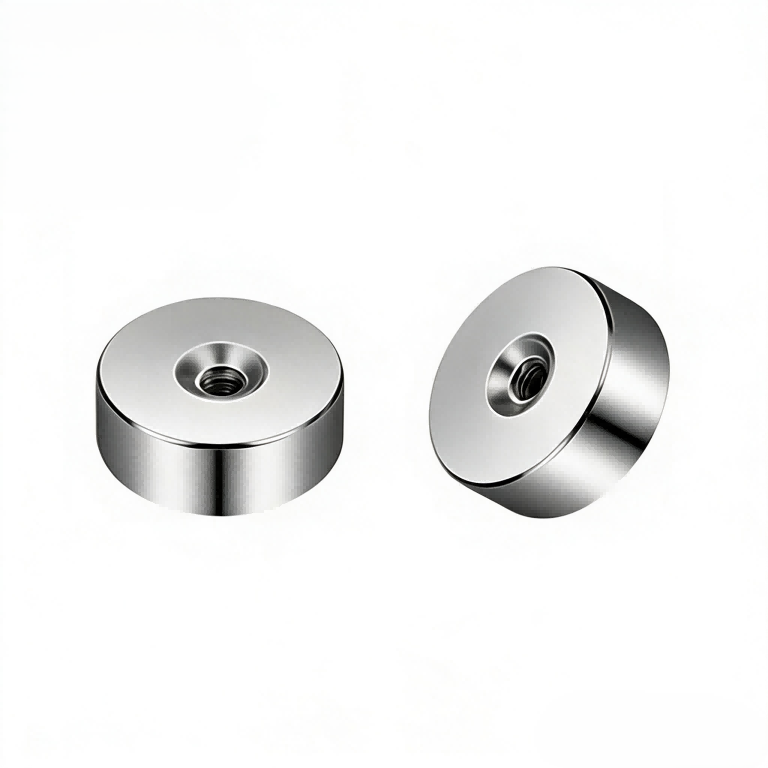
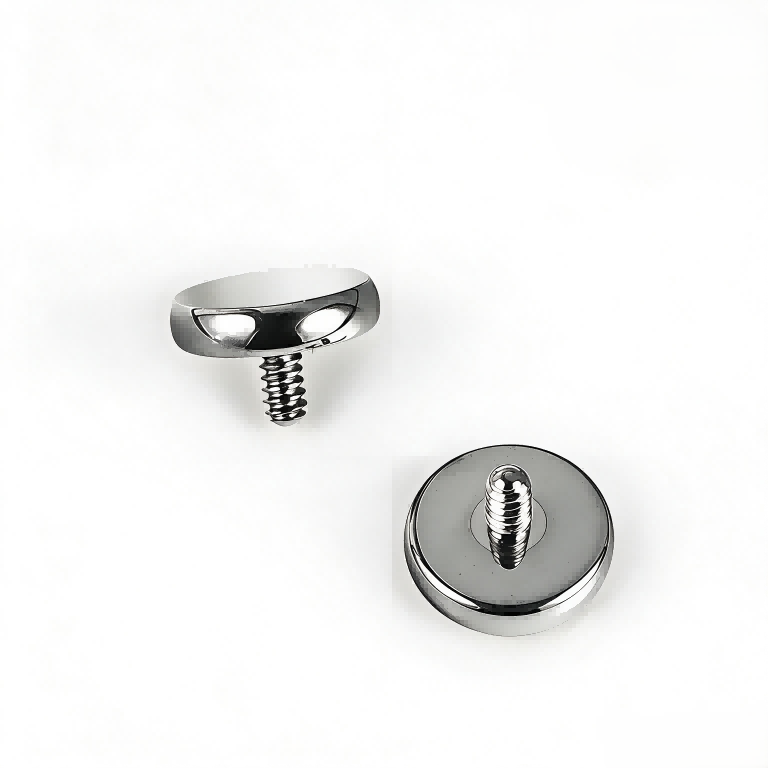
With externally threaded jewelry, the thread is located on the outside of the bar. With internally threaded jewelry, the bar has an internal opening and the thread is located on the removable ball or decorative end.
Many professional piercing studios prefer internally threaded titanium jewelry because it provides a smoother external bar surface. However, the quality of internally threaded jewelry depends heavily on machining precision.
When sourcing internally threaded titanium jewelry, buyers should verify:
- Thread position
- Thread depth
- Smoothness during assembly
- Compatibility between different components
- Closing gap
- Strength after repeated use
A well-made internal thread should engage smoothly without excessive force, looseness or cross-threading.
What Documentation Should Wholesale Buyers Request?
The required documentation depends on the market, intended application and buyer’s internal quality system.
For ASTM F136 titanium body jewelry, professional buyers may request:
Material Certificate
The certificate should identify the material and applicable standard. When full chemical composition is required, the document should show the relevant alloy elements and controlled interstitial elements.
Lot Information
A heat number, wire lot or material batch number can help connect the raw material to the corresponding production order.
Traceability Records
Some buyers require the supplier to state which material lot was used for a particular production batch. This requirement should be discussed before production begins.
Product Specification Sheet
The specification should clearly state the confirmed dimensions, structure, finish, threading and other technical requirements.
Approved Sample
The approved sample should serve as the visual and functional production reference together with the written specifications and tolerances.
Material documentation should always be confirmed with the supplier before placing an order, particularly when the buyer requires batch-specific records.
How to Evaluate Samples Before Mass Production
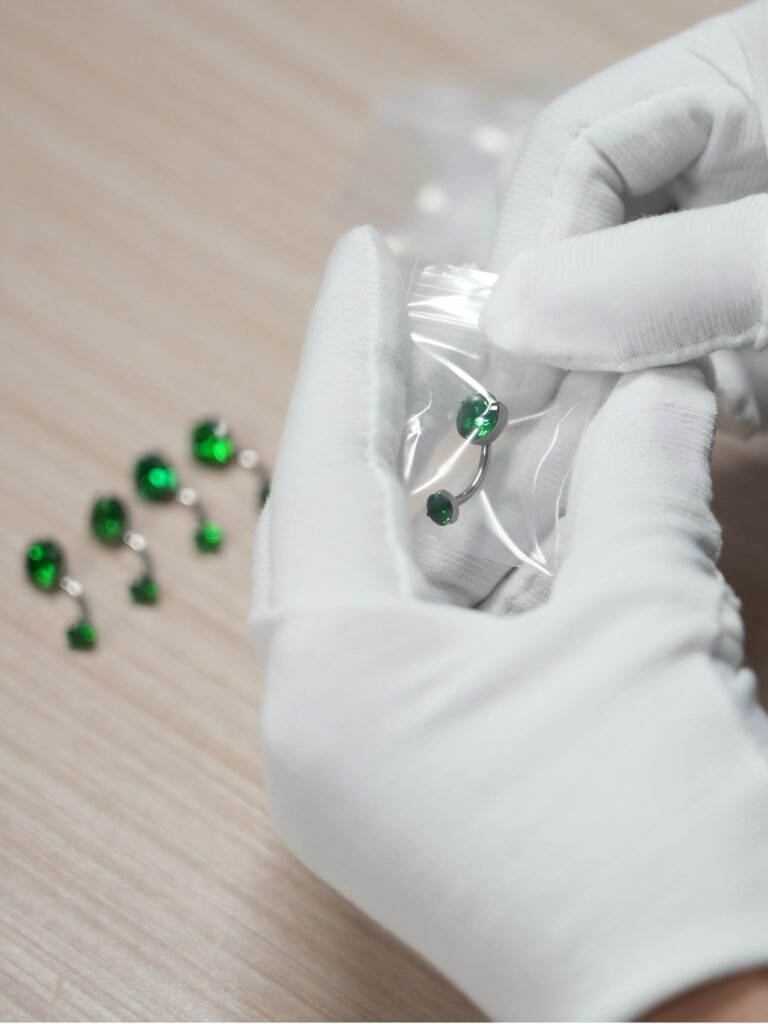
Samples should represent the supplier’s actual production quality. Buyers should avoid evaluating only one attractive catalog sample that may not reflect normal mass production.
A practical sample inspection should include:
- Confirming the product dimensions with suitable measuring tools
- Inspecting the surface under bright light or magnification
- Opening and closing threaded components several times
- Checking whether balls and ends close flush
- Comparing compatible components across several samples
- Checking for scratches, burrs and machining marks
- Comparing samples against reference products
- Recording approved dimensions and appearance standards
If the product is custom-made, the buyer and manufacturer should keep identical approved samples whenever possible.
OEM and Private-Label Titanium Body Jewelry
OEM and private-label services allow piercing brands, wholesalers and studios to create product collections that match their own market positioning.
Common customization options include:
- Customized gauges and lengths
- Customized ball and disc sizes
- Product development from drawings
- Product development from physical samples
- Laser logo engraving
- Branded individual packaging
- Private-label packaging design
- Customized product combinations
For custom titanium piercing jewelry, the buyer should provide complete specifications rather than only a product image.
A useful specification sheet should include:
- Product drawing or reference photo
- Material requirement
- Gauge and length
- Thread specification
- Ball or end size
- Surface finish
- Logo position
- Packaging requirements
- Required quantity
- Inspection standard
The more complete the specifications are, the easier it is for the manufacturer to provide accurate pricing and stable production.
How to Choose a Titanium Body Jewelry Manufacturer
When selecting a titanium body jewelry manufacturer, buyers should consider more than the quoted unit price.
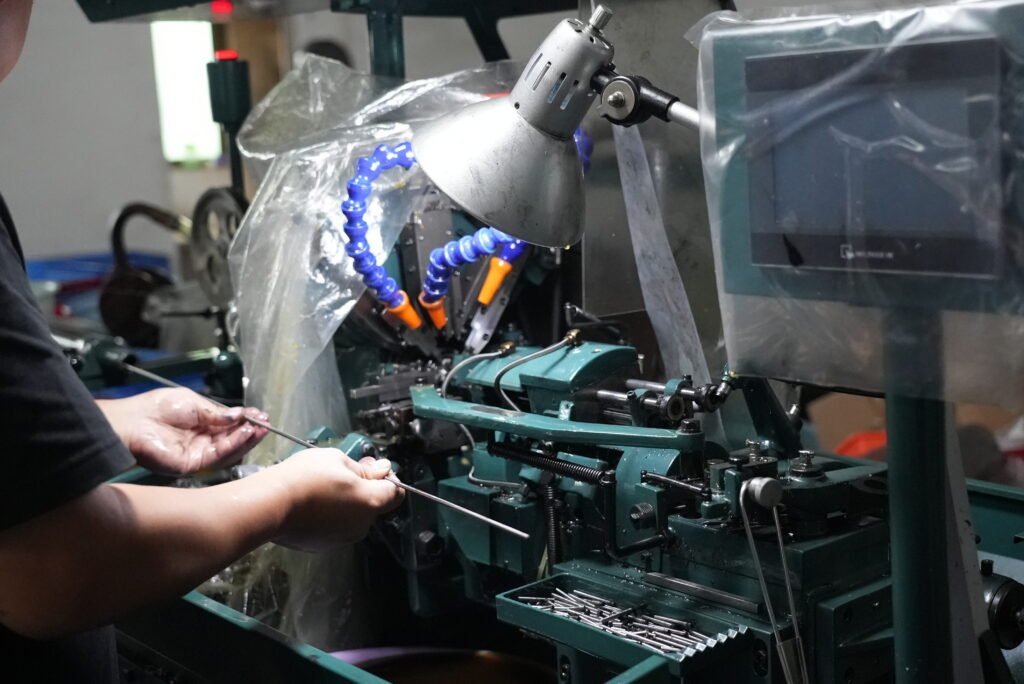
Use the following checklist:
- Confirm the exact material standard.
- Ask what material documentation is available.
- Request samples before mass production.
- Inspect polishing, threading and dimensions.
- Confirm how each product dimension is measured.
- Define tolerances for important specifications.
- Approve complete product combinations.
- Confirm custom production capabilities.
- Discuss logo and packaging requirements.
- Agree on the quality standard before production.
- Confirm how quality claims will be handled.
- Evaluate communication and technical response quality.
A reliable supplier should be willing to clarify technical details rather than giving general answers about quality.
Frequently Asked Questions
What does ASTM F136 mean for titanium body jewelry?
ASTM F136 is a specification for wrought Ti-6Al-4V ELI titanium alloy used in surgical implant applications. It defines chemical, mechanical and metallurgical requirements for the raw material.
Is all G23 titanium ASTM F136 compliant?
Not necessarily. Grade 23 identifies Ti-6Al-4V ELI alloy, while ASTM F136 is a specific material standard. Buyers requiring ASTM F136 material should request appropriate supporting documentation.
Is ASTM F136 enough to guarantee finished jewelry quality?
No. The raw material standard is important, but buyers must also evaluate polishing, threading, dimensions, component fit and production consistency.
Can titanium body jewelry be custom-made?
Yes. Depending on the product and manufacturing process, customized gauges, lengths, ball sizes, components and designs can be produced. Laser logo engraving and private-label packaging may also be available.
What should buyers inspect before placing a wholesale order?
Buyers should inspect the material documentation, surface finish, threading, dimensional accuracy, component compatibility and consistency between multiple samples.
Should buyers approve samples before mass production?
Yes. Approved samples, confirmed specifications and written tolerances should be used together as the production and inspection reference.
Work With an Experienced Titanium Body Jewelry Manufacturer
With more than 14 years of manufacturing experience, Fashionmate Body Jewelry supplies a wide range of titanium piercing products, including piercing components, labrets, nose jewelry, earrings and ear studs, eyebrow jewelry, and navel studs and rings.
We support OEM and ODM projects, customized sizes, laser logo engraving and private-label individual packaging. Products can be developed from drawings, specifications or physical reference samples.
If you are a piercing studio, body jewelry brand, distributor or wholesaler looking for a titanium body jewelry manufacturer, contact us to receive our latest catalog or discuss your custom project.
Website: www.fmbodyjewelry.com
References:
- ASTM International: Standard Specification for Wrought Titanium-6Aluminum-4Vanadium ELI Alloy for Surgical Implant Applications
- Association of Professional Piercers: Jewelry for Initial Piercings