When purchasing titanium piercing jewelry, choosing between internally threaded, externally threaded and threadless body jewelry is an important decision.
The connection system affects how the jewelry is assembled, how different components fit together and how consistently a product range can be manufactured. It also influences product positioning, production cost and compatibility between posts, balls and decorative ends.
For piercing studios, body jewelry brands, wholesalers and distributors, understanding these differences makes it easier to select suitable products and communicate accurate specifications to a manufacturer.
This guide compares internally threaded vs. externally threaded body jewelry, explains how threadless systems work and provides a practical checklist for evaluating threading quality before placing a wholesale order.
What Is Threaded Body Jewelry?
Threaded body jewelry uses small screw threads to connect a removable end to a post, bar or ring.
One component has a male thread, while the other has a corresponding female thread. Depending on the structure, the thread may be located inside or outside the post.
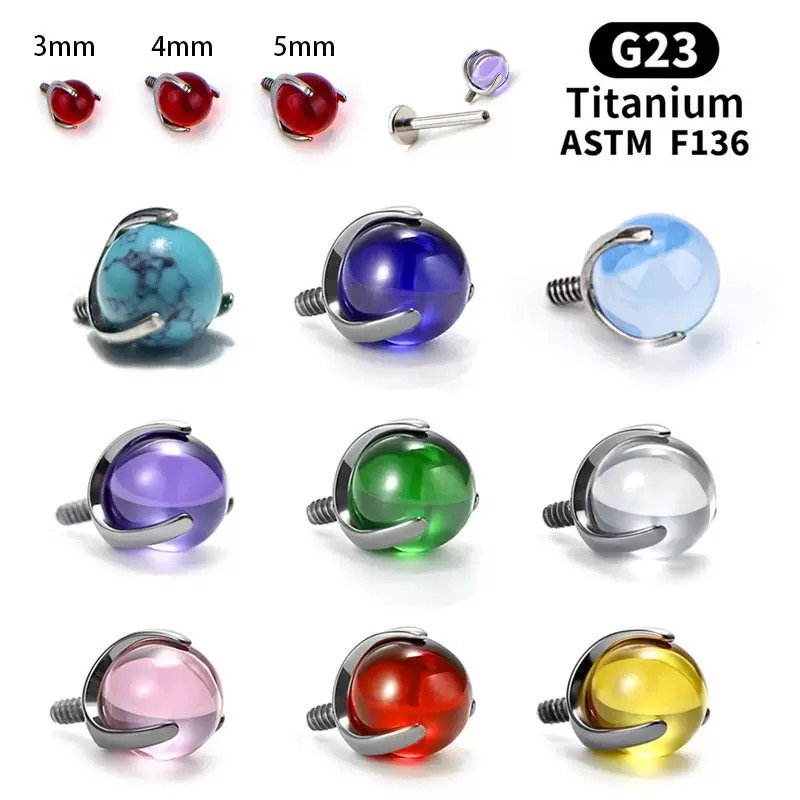
Threaded connections are commonly used for:
- Labret studs
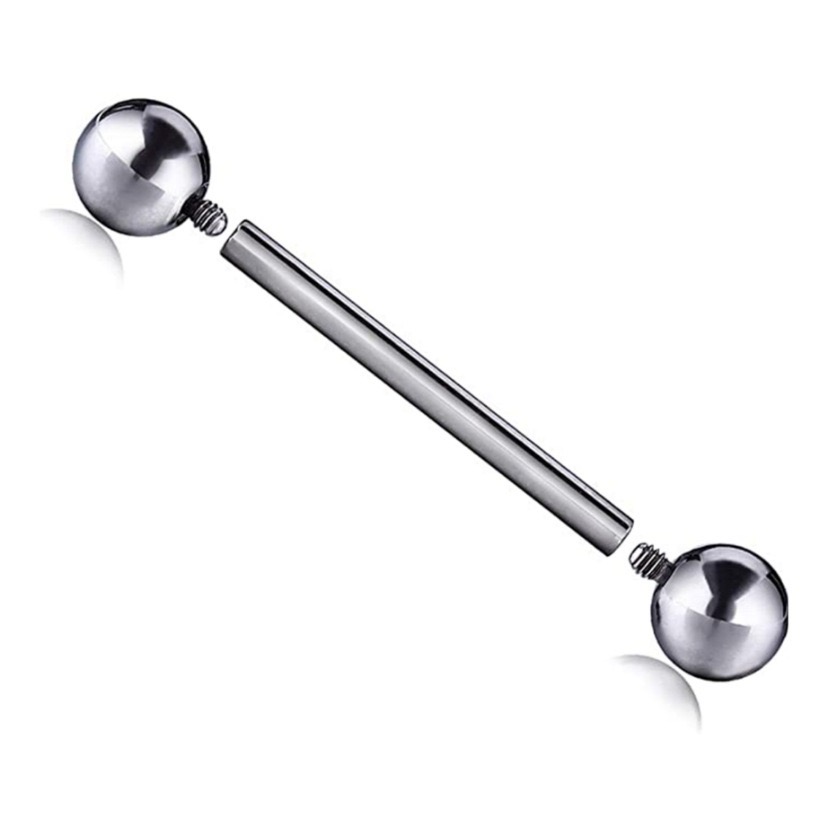
- Straight barbells
- Curved barbells
- Circular barbells
- Nipple barbells
- Eyebrow jewelry
- Navel jewelry
- Surface anchor tops
- Balls, spikes and decorative ends
Some products have one removable end, while others have two removable ends. Before ordering, buyers should confirm whether the quoted price includes only the bar or the complete piece with balls or decorative ends.
What Is Internally Threaded Body Jewelry?
Internally threaded body jewelry has a threaded hole inside the post or bar. The removable ball, spike or decorative top has a small external thread that screws into the post.
This means that the wearable portion of the bar does not have an exposed screw thread.
The Association of Professional Piercers includes internally threaded jewelry in its standard for initial piercing jewelry because the portion passing through the tissue is smooth. It also identifies threadless jewelry as an acceptable alternative.
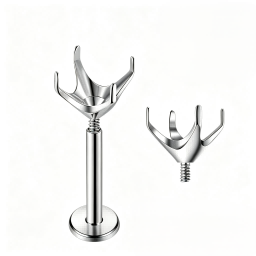
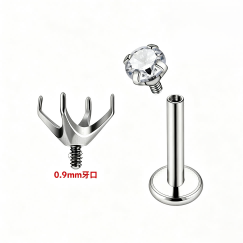
Advantages of Internally Threaded Body Jewelry
Internally threaded titanium jewelry offers several advantages for professional product ranges.
Smooth Wearable Surface
The thread is located inside the bar, leaving the external wearable surface smooth.
Interchangeable Components
A compatible post can be combined with different balls, gemstones, spikes and decorative ends. This allows a brand or studio to create multiple product combinations using a smaller number of post specifications.
Professional Product Positioning
Internally threaded titanium jewelry is commonly selected for professional piercing collections, especially labrets, barbells and other products intended for studios.
Customization Opportunities
Manufacturers can develop different post lengths, ball sizes and decorative ends around a confirmed threading system. This is useful for OEM and private-label collections.
Quality Issues Buyers Should Check
The existence of an internal thread does not automatically mean the finished product is high quality. Buyers should inspect:
- Whether the threaded hole is centered
- Whether the removable end screws in smoothly
- Whether the thread feels loose
- Whether cross-threading occurs
- Whether the end closes flush against the post
- Whether there is a visible closing gap
- Whether the connection remains secure after repeated use
- Whether components from the same specification are interchangeable
Internal threading requires accurate machining. Small differences in thread diameter, pitch, depth or position may affect assembly and compatibility.
What Is Externally Threaded Body Jewelry?
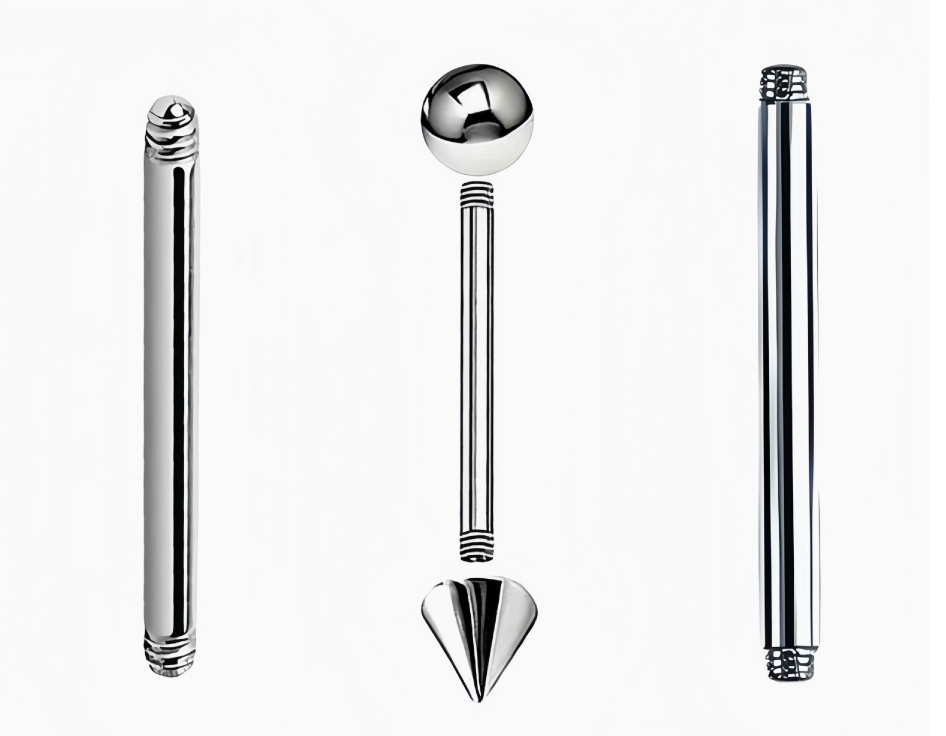
Externally threaded body jewelry has the screw thread on the outside of the post or bar. The removable ball or decorative end has a corresponding internal threaded hole.
The exposed thread passes through the piercing channel when the jewelry is inserted or removed.
Externally threaded jewelry has traditionally been used for many barbells, curved bars and other body jewelry products. It is still available in certain markets, particularly for established product ranges and price-sensitive collections.
Advantages of Externally Threaded Jewelry
From a manufacturing and commercial perspective, externally threaded products may offer:
- A relatively simple connection structure
- Lower production costs for some designs
- Compatibility with established external-thread product lines
- Availability across traditional body jewelry categories
- Suitability for markets that continue to request this structure
However, professional buyers should consider the intended application and market positioning before choosing an externally threaded range.
Quality Issues Buyers Should Check
When evaluating externally threaded body jewelry, inspect:
- Whether the external thread has sharp edges
- Whether there are visible burrs
- Whether the thread surface is properly finished
- Whether the ball screws on without resistance
- Whether the connection remains tight
- Whether the threaded section is correctly aligned
- Whether repeated assembly causes excessive wear
- Whether the transition from the wearable bar to the thread is smooth
The Association of Professional Piercers recommends internally threaded or threadless jewelry for initial piercings because exposed external threading can create a rougher surface during insertion and removal.
What Is Threadless Body Jewelry?
Threadless body jewelry, also called press-fit jewelry, does not use screw threads.
A threadless system normally consists of a hollow post and a decorative end with a thin insertion pin. The pin is placed into the post and held by tension.
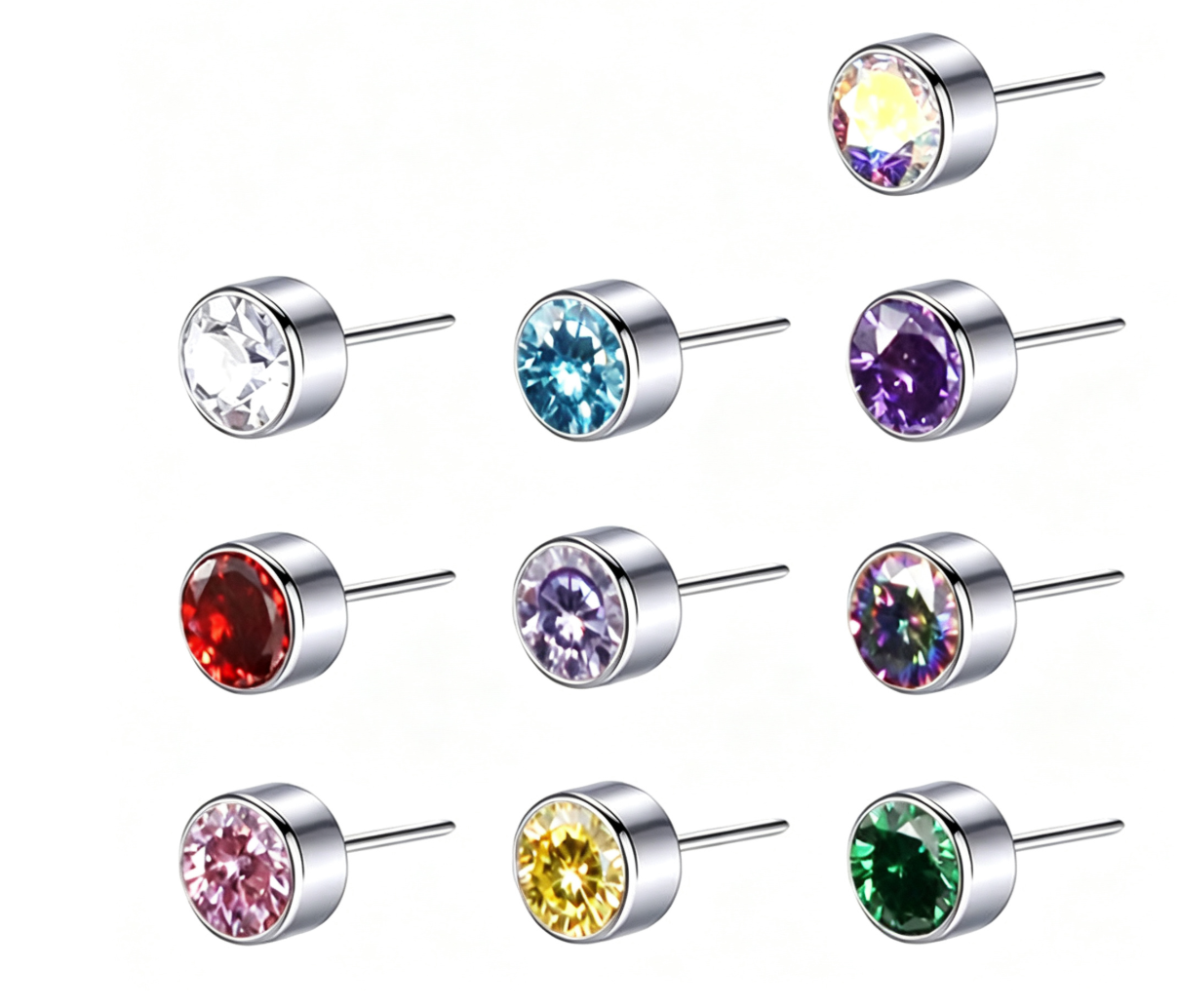
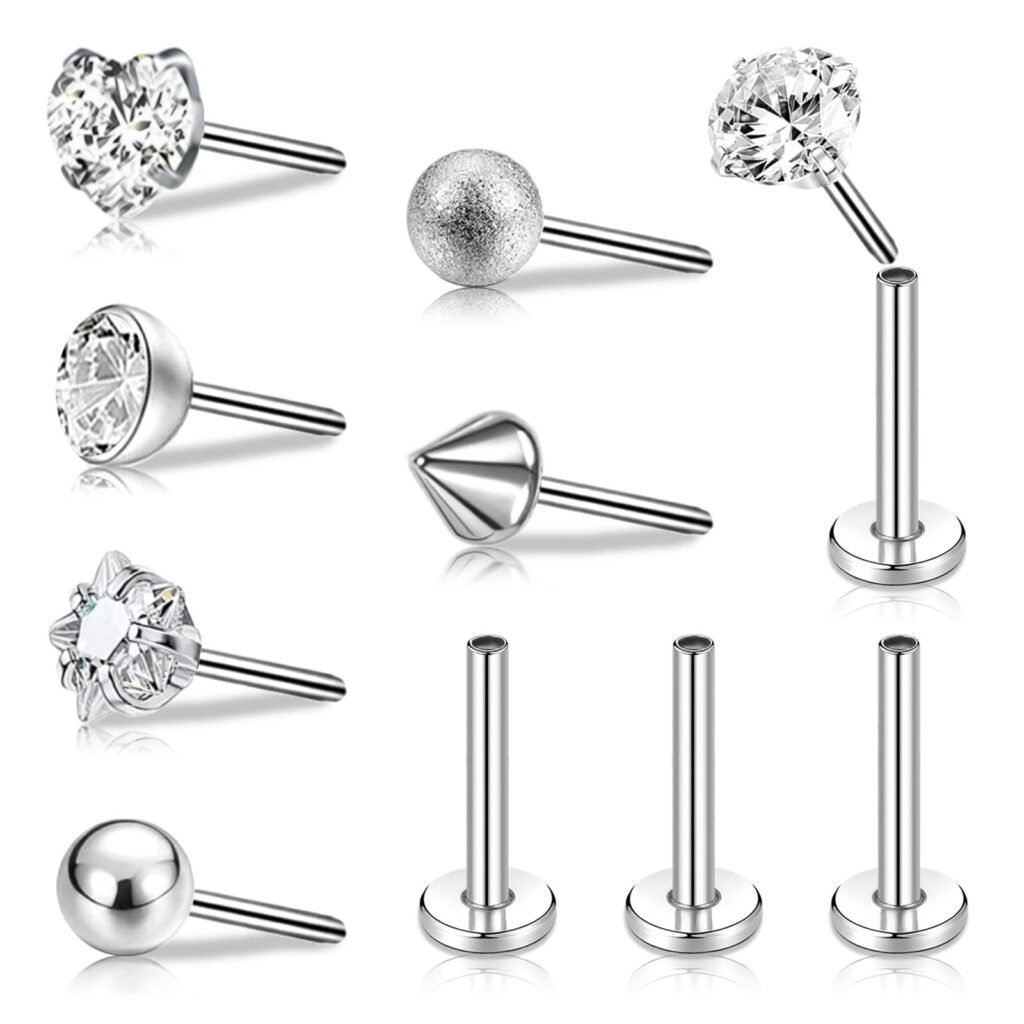
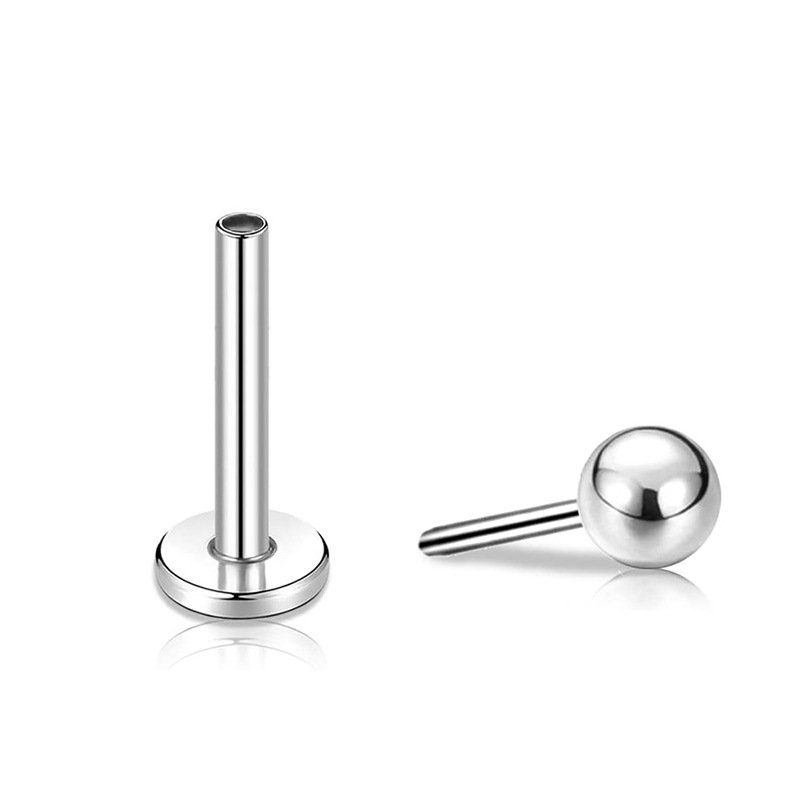
In many systems, a slight bend in the pin creates the tension required to keep the decorative end securely in place.
Threadless systems are commonly used for:
- Labret posts
- Ear piercing jewelry
- Nose jewelry
- Cartilage jewelry
- Decorative tops
- Gemstone ends
- Flat-back jewelry
Advantages of Threadless Body Jewelry
Easy Top Replacement
Decorative ends can be changed without unscrewing a small threaded component.
Flexible Product Combinations
A single compatible post may work with various decorative tops, allowing piercing studios and brands to build coordinated product collections.
No Exposed Screw Threads
The wearable portion of the post is smooth, and there are no screw threads on the post or top.
Inventory Flexibility
Studios may be able to stock a core range of posts and combine them with different decorative ends, provided that all components use a compatible threadless system.
Threadless Quality Factors
Threadless jewelry also requires precision manufacturing. Buyers should inspect:
- Pin diameter
- Pin length
- Pin straightness
- Pin hardness
- Post opening diameter
- Insertion resistance
- Removal resistance
- Connection stability
- Closing gap
- Compatibility between posts and decorative ends
A pin that is too loose may not stay securely in the post. A pin that is too tight may be difficult to insert or remove and could become damaged.
The correct tension should be confirmed through sampling and repeated assembly tests.
Internally Threaded vs. Externally Threaded vs. Threadless Jewelry
The following table provides a general comparison.
| Feature | Internally Threaded | Externally Threaded | Threadless |
|---|---|---|---|
| Connection method | Thread inside post | Thread outside post | Tension-fit pin |
| Removable end | External male thread | Internal female thread | Insertion pin |
| Wearable post surface | Smooth | Exposed thread at end | Smooth |
| Manufacturing precision | High | Moderate to high | High |
| Component replacement | Screw-on | Screw-on | Press-fit |
| Common products | Labrets, barbells, circulars | Traditional barbells and curved bars | Labrets, ear and nose jewelry |
| Main buyer concern | Thread fit and closing gap | Burrs and exposed thread finish | Pin tension and compatibility |
| Initial piercing positioning | Common professional option | Generally not preferred | Common professional option |
The correct choice depends on the customer’s product range, target price, component system and market requirements.
For professional piercing collections, internally threaded and threadless systems are commonly preferred. Externally threaded products may remain relevant for specific established markets and product categories.
Are Body Jewelry Threads Universal?
No. Body jewelry threads are not automatically universal.
This is one of the most important issues for buyers purchasing posts, balls and decorative ends separately.
Two products may have the same bar gauge but use different:
- Thread diameters
- Thread pitches
- Thread lengths
- Thread depths
- Male and female thread structures
- Ball-seat geometries
- Production tolerances
For example, two 1.2 mm labret posts from different suppliers may not necessarily accept the same decorative end. Similarly, two balls with the same external diameter may have different internal threads.
Threadless components can also vary. The pin diameter, pin length, post opening and required tension may differ between manufacturers.
Buyers should never assume that balls, tops and posts from different manufacturers are interchangeable without testing them.
Gauge Size and Thread Size Are Not the Same
Gauge describes the thickness of the wearable bar or post. Thread size describes the connection between the post and removable end.
A 1.2 mm bar does not necessarily have a 1.2 mm thread. The internal threaded hole must be smaller than the external diameter of the post.
When preparing a purchase specification, buyers should list the bar gauge and thread details separately.
Important information may include:
- Bar gauge
- Wearable length
- Internal or external threading
- Thread diameter
- Thread pitch
- Thread length
- Thread depth
- Ball or decorative end size
- Ball-seat structure
- Required closing gap
- Required component compatibility
If the buyer does not know the exact thread specification, a physical reference sample can help the manufacturer evaluate the structure.
Why Do Some Balls Leave a Gap After Closing?
A visible gap between a ball and bar may result from several factors:
- Thread length is too long
- Threaded hole is too shallow
- Ball-seat geometry does not match the bar
- Thread is not centered
- Bar end is not machined evenly
- Ball diameter is unsuitable for the bar
- Production tolerances are inconsistent
- The ball has not been fully tightened
Some buyers require a machined flat seat around the threading so the ball closes flush against the post. Others accept a standard rounded ball structure.
This requirement should be confirmed with drawings, close-up photos or physical samples before mass production.
The buyer should also specify whether the connection must have zero visible gap and how the closing appearance will be inspected.
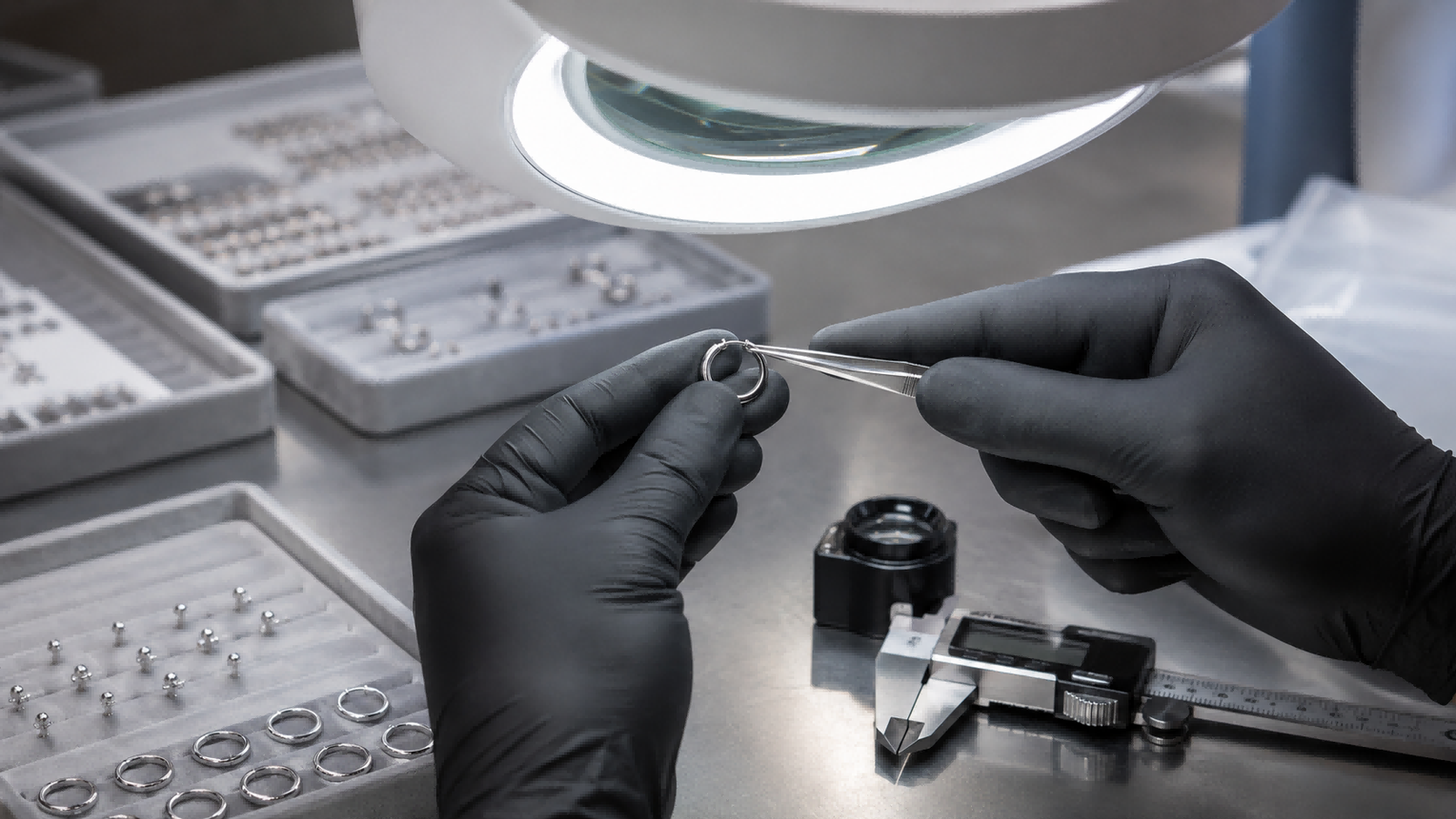
How to Inspect Body Jewelry Threading Quality
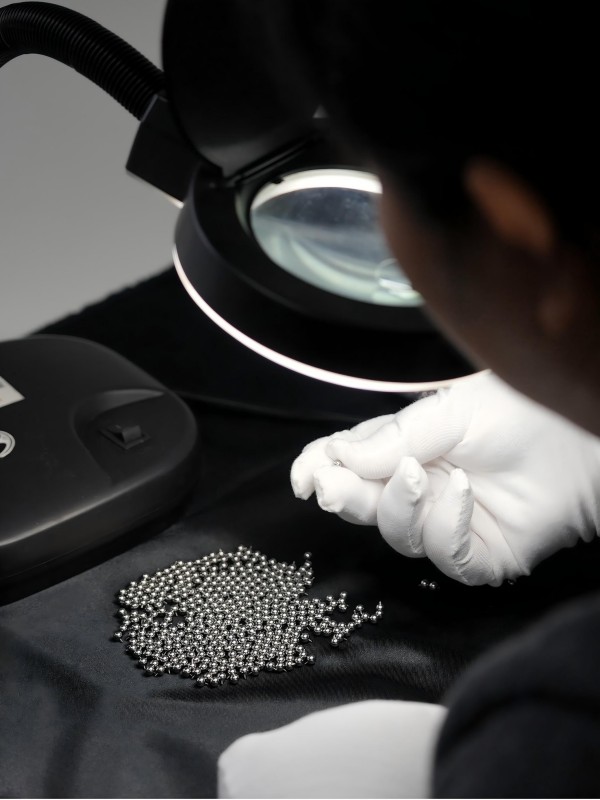
Professional buyers should evaluate multiple samples from each specification rather than inspecting only one piece.
1. Visual Inspection
Use strong lighting or magnification to check:
- Thread position
- Burrs and sharp edges
- Machining marks
- Surface scratches
- Ball-seat geometry
- Post opening
- Closing gap
- Polishing around the connection
2. Assembly Test
Open and close each component several times.
Check whether:
- The thread engages smoothly
- Excessive force is required
- The component becomes stuck
- Cross-threading occurs
- The end remains secure
- The connection loosens after repeated use
- The removable end closes to the same position each time
3. Cross-Compatibility Test
Take multiple posts and ends from the same SKU and exchange the components.
This helps determine whether:
- All balls fit all matching posts
- Different batches remain compatible
- Threading tolerances are stable
- Replacement components can be supplied later
4. Dimensional Inspection
Depending on the product, buyers may measure:
- Bar gauge
- Wearable length
- Ball diameter
- Disc diameter
- Thread diameter
- Thread length
- Post opening
- Closing gap
Important dimensions and tolerances should be confirmed before mass production.
5. Reference Sample Comparison
If the buyer has an existing product standard, reference samples can be sent to the manufacturer.
The manufacturer should compare:
- Thread structure
- Closing appearance
- Surface polish
- Dimensions
- Component fit
- Assembly resistance
For custom production, both the buyer and manufacturer should retain an approved sample whenever possible.
Threading Systems for Different Piercing Products
Titanium Labrets
Labrets are commonly produced with internally threaded or threadless structures.
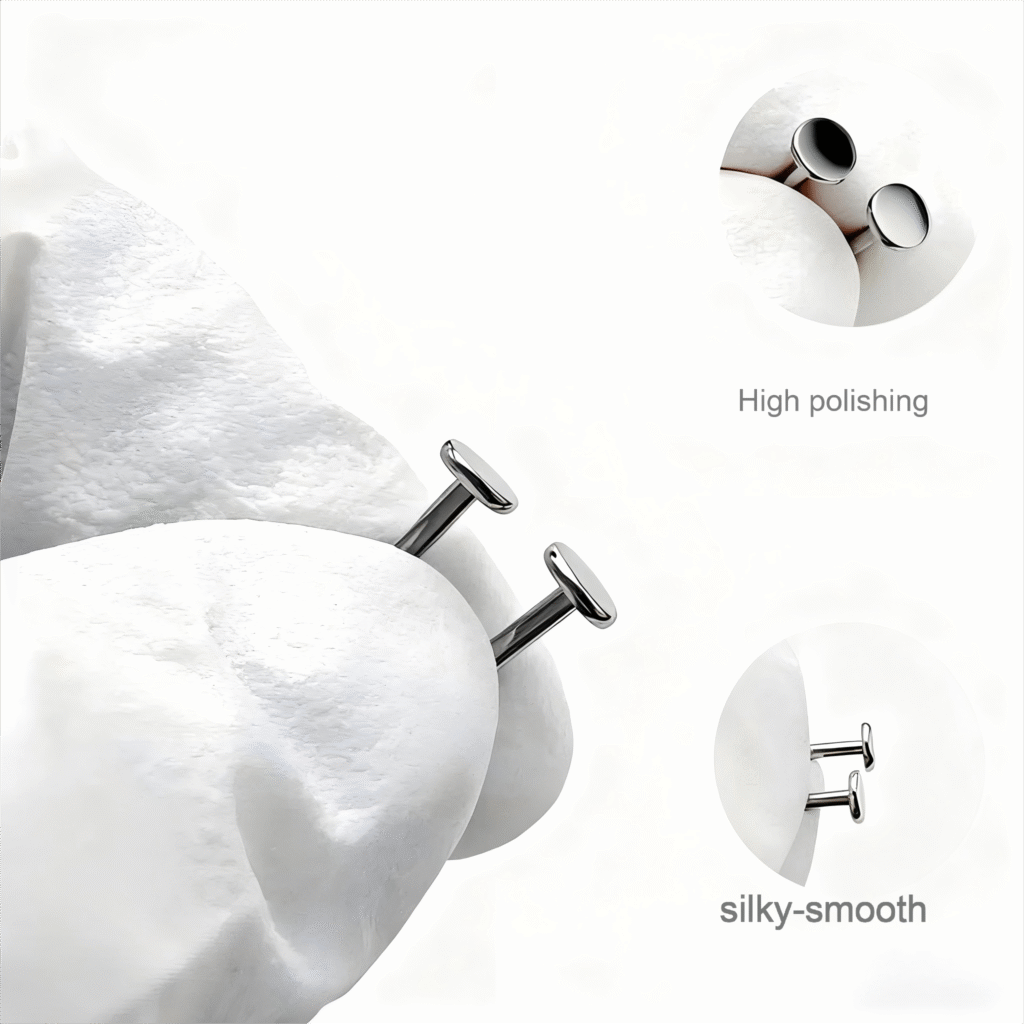
Buyers should confirm:
- Bar gauge
- Wearable length
- Flat-back diameter
- Thread or pin specification
- Ball or decorative top size
- Required compatibility
The flat back, post and removable top should be evaluated as a complete product.
Titanium Barbells
Straight barbells may have one or two removable balls. Both ends should be checked for threading consistency.
For complete-piece quotations, buyers should specify:
- Bar gauge and length
- Number of removable balls
- Ball diameter
- Thread structure
- Surface finish
- Required closing gap
Titanium Curved Barbells
Curved barbells are commonly used for eyebrow and navel jewelry.
In addition to threading, buyers should confirm:
- Curve
- Wearable length
- Upper and lower ball sizes
- Whether both ends are removable
- Decorative component orientation
Titanium Circular Barbells
Circular barbells normally use two threaded balls or cones.
The manufacturer should control:
- Ring diameter
- Opening distance
- Bar gauge
- End alignment
- Thread position
- Ball or cone size
Titanium Nose and Ear Jewelry
Threadless and internally threaded structures are frequently used for nose and ear jewelry.
For decorative collections, buyers should confirm whether different tops can be used with the same post system.
How to Prepare a Wholesale Sample Evaluation
A practical sample evaluation may include the following steps:
- Select several samples per SKU.
- Confirm the material and product specifications.
- Measure the bar, length and removable ends.
- Inspect all surfaces under strong lighting.
- Open and close threaded components several times.
- Test different matching balls and posts together.
- Check whether the ends close without a visible gap.
- Compare the products with approved reference samples.
- Record any acceptable visual differences.
- Confirm production tolerances in writing.
Material quality should be evaluated together with machining and threading quality. For more information, read our guide to ASTM F136 titanium body jewelry.
OEM and Custom Threading Options
OEM body jewelry projects may require custom dimensions or connection systems.
Possible customization requirements include:
- Customized bar gauges
- Customized wearable lengths
- Different ball diameters
- Internal or external threading
- Customized thread dimensions
- Specific ball-seat geometry
- Custom products based on drawings
- Custom products based on physical samples
- Laser logo engraving
- Private-label individual packaging
A product image alone may not provide enough information for accurate production.
For a custom titanium piercing jewelry project, buyers should provide:
- Detailed product drawing
- Reference sample, if available
- Material requirement
- Complete dimensions
- Threading structure
- Ball and decorative end sizes
- Surface finish requirement
- Logo position
- Packaging requirements
- Order quantity
- Inspection criteria
The final specifications and approved samples should serve together as the production reference.
Frequently Asked Questions
What is the difference between internally and externally threaded body jewelry?
Internally threaded jewelry has the thread inside the post, while the removable end has an external thread. Externally threaded jewelry has the thread outside the post, while the ball or end has an internal threaded hole.
Is internally threaded jewelry better?
Internally threaded jewelry provides a smooth wearable post surface and is commonly preferred for professional piercing collections. However, finished quality still depends on material, machining, polishing, dimensional accuracy and thread consistency.
How does threadless body jewelry stay in place?
A thin pin on the decorative end is inserted into a hollow post. Tension between the pin and post holds the components together.
Are all internally threaded balls interchangeable?
No. Thread diameter, pitch, length and tolerances may vary between manufacturers. Compatibility should always be confirmed through specifications and physical testing.
Are all 1.2 mm or 1.6 mm posts made with the same thread?
No. Bar gauge and thread size are separate measurements. Posts with the same external gauge may use different internal thread specifications.
Why does a threaded ball not close flush?
Possible reasons include mismatched thread length, insufficient thread depth, off-center machining or incompatible ball-seat geometry.
Can custom thread sizes be manufactured?
Custom threading may be possible, depending on the product structure, dimensions, equipment and order quantity. Technical drawings or reference samples are normally required.
What should wholesalers inspect before ordering?
Buyers should inspect the material, surface polish, dimensions, threading, closing gap and compatibility between multiple posts and removable ends.
Work With an Experienced Titanium Body Jewelry Manufacturer
FM Body Jewelry has more than 14 years of manufacturing experience and supplies titanium piercing components, labrets, nose jewelry, earrings and ear studs, eyebrow jewelry, navel jewelry and other body piercing products.
We support OEM and ODM production, customized sizes, product development from drawings or samples, laser logo engraving and private-label individual packaging.
If you are a piercing studio, body jewelry brand, wholesaler or distributor looking for a titanium body jewelry manufacturer, contact us to receive our latest catalog or discuss your custom project.
Website: www.fmbodyjewelry.com
Reference:
Association of Professional Piercers — Jewelry for Initial Piercings:
https://safepiercing.org/jewelry-for-initial-piercings/